Appliance Leak Water Damage in Hopkins, MN
Washer hoses, dishwasher connections, ice maker tubes and water softeners leak where nobody looks: under cabinets, behind machines and into the subfloor. The drying team finds the water and dries it before flooring cups and cabinets swell.
(888) 432-4933Dry the appliance leak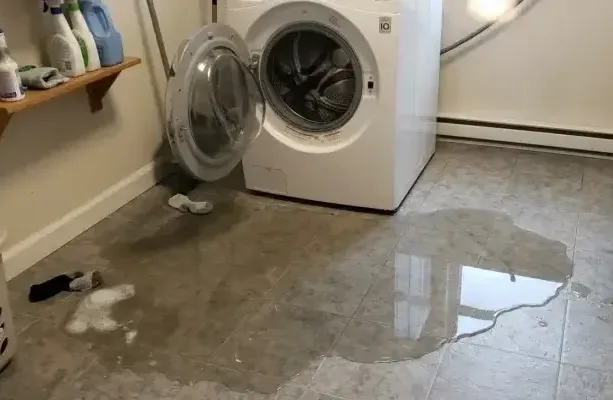
Appliance leaks are often slow and hidden. By the time water shows at the edge of the floor, it has soaked the underlayment, the bottom of the cabinets and sometimes the ceiling of the room below.
What to do first for appliance leak water damage
- 1
Shut the appliance valve
Behind the washer, under the sink or behind the refrigerator.
- 2
Unplug the appliance
Only if the outlet and floor are dry; otherwise cut the breaker.
- 3
Pull back what you can
Move the machine out if safe and soak up water at the edges.
- 4
Photograph the leak
The hose, the valve and the wet floor for the claim.
What does appliance leak water damage cost in Hopkins, MN?
In Hopkins, appliance leak water damage cleanup typically runs $800 to $6,000, depending on how far the water spread under cabinets and floors, whether the room below was affected and how long the leak ran.
Found quickly, one room
$800 to $1,800- Extraction
- Toe-kick drying
- Daily readings
Under cabinets and flooring
$1,800 to $3,800- Cabinet base drying
- Flooring lifted
- Antimicrobial
Room below affected
$3,800 to $6,000- Ceiling opened below
- Two drying zones
- Extended equipment
These are typical figures, not a quote. Water category, wet square footage, material class and how quickly drying began move the total the most. The water damage cost calculator gives a closer range for your rooms.
How appliance leak water damage is done, start to finish
Moisture gets mapped before a single fan is placed, so the plan follows what is actually wet. The drying team leaves the equipment running until meter readings reach the goal, whatever the surface looks like.
- 1
Trace the spread
Meters check under cabinets, behind machines and in the room below.
- 2
Extract
Water is pulled from floors and the cabinet bases.
- 3
Open the hidden spots
Toe kicks come off and small holes let dry air under cabinets.
- 4
Dry and log
Dehumidifiers and air movers run until readings reach the goal.
Which appliances leak most
Washing machine supply hoses burst under pressure, dishwasher connections loosen, refrigerator ice maker tubes crack and water softeners, common here because city water is very hard, can leak at the brine tank or bypass valve.
- Washer supply hoses and drain hoses, and overflowing laundry tubs.
- Dishwasher supply connections, drain hoses and door seals.
- Ice maker and filter tubing; water softener valves and brine tanks.
Drying under cabinets and floors
Water under a kitchen run of cabinets cannot dry on its own. The tech checks the toe-kick area, the cabinet floors and the subfloor with meters; the drying team removes toe kicks or drills small holes to push dry air underneath, and pulls flooring only where it traps water.
- Washer and dishwasher drain water is Category 2 and gets antimicrobial treatment.
- Laminate and vinyl plank often trap water and may need to come up.
- The basement ceiling under a kitchen or laundry room is checked too.
Preventing the next leak
Braided steel hoses, a shutoff you can reach and a leak sensor under each machine prevent many of these losses. EPA Fix a Leak Week lists checks, and the EPA home moisture cleanup page explains why hidden water under cabinets needs drying. See water heater leak cleanup for tank failures.
Appliance leak water damage around Hopkins and west Hennepin County
The restoration crew works both ZIPs, 55343 and 55305, from Mainstreet and the Avenues out to Interlachen Park, Hobby Acres, Park Valley and the Blake Road side of Minnehaha Creek.
Nearby coverage reaches Minnetonka, Edina, St. Louis Park, Plymouth, Orono.
Other water problems handled here
Appliance Leak Water Damage questions in Hopkins, MN
Can cabinets be saved after a dishwasher leak?
Often, if drying starts quickly. Particleboard that swelled or delaminated usually has to be replaced.
Is washing machine water dirty?
Drain water from a washer is Category 2 gray water, so the area gets antimicrobial treatment as it dries. A burst supply hose starts as clean water.
Why is the floor cupping?
Wood and some laminate absorb water from below and swell at the edges. Drying from underneath can bring hardwood back; laminate often does not recover.
Are appliance leaks covered by insurance?
Sudden leaks are often covered, while slow, long-term leaks may be excluded. Coverage depends on your policy, so check with your own insurer.
Who repairs the appliance?
An appliance technician or plumber repairs the machine or connection. The restoration team dries the house.
How long will drying take?
Usually two to four days, longer when water got under cabinets or into the subfloor.
Appliance leak soaking the floor? Call now.
Water under cabinets and flooring does not dry on its own. The drying team finds it and pushes dry air in.
(888) 432-4933Start drying under the cabinets- Active water treated as urgent, 24/7
- Drying goal set by IICRC S500
- Moisture logs kept for the adjuster
- Find us on Google