Water Extraction and Removal in Hopkins, MN
Every gallon pulled out as liquid is a gallon the dehumidifiers never have to evaporate. The extraction crew removes standing water from carpet, pad and concrete first, which shortens the whole dry-out.
(888) 432-4933Get the standing water out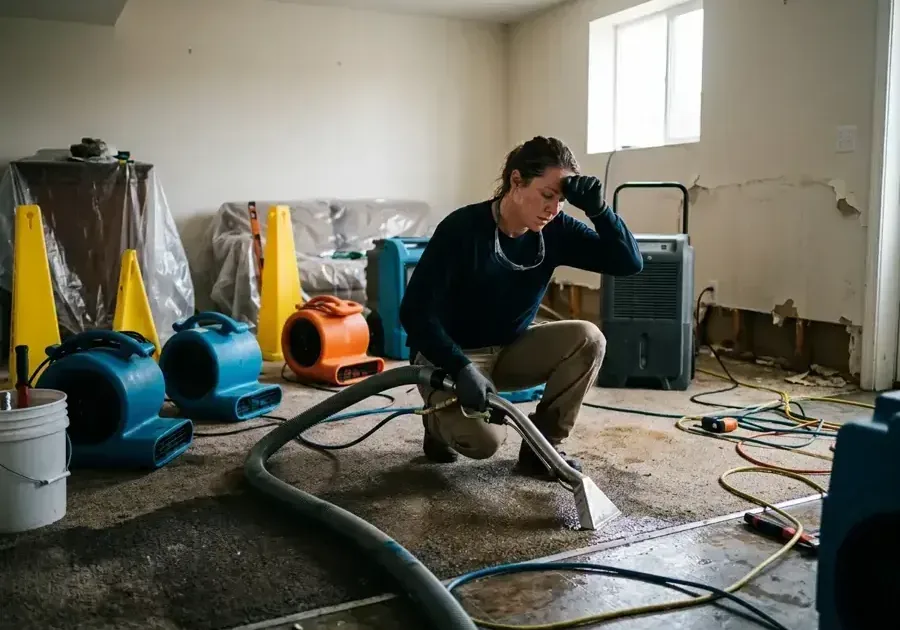
Extraction is the fastest, cheapest drying there is. Removing water as a liquid takes minutes; evaporating the same water out of carpet and drywall takes days of equipment time.
What to do first for water extraction and removal
- 1
Stop the source
Close the fixture valve or the main shutoff beside the meter.
- 2
Cut power to wet rooms
From a dry panel only.
- 3
Pull furniture off wet carpet
Or put foil and blocks under the legs to stop stains.
- 4
Photograph the water
Before anything is moved, for the claim file.
What does water extraction and removal cost in Hopkins, MN?
In Hopkins, water extraction with initial drying setup typically runs $500 to $4,500, depending on how many rooms are wet, how deep the water is, the water category and whether truck-mounted equipment can reach.
One room
$500 to $1,200- Wand extraction
- Moisture check
- Air movers placed
Several rooms or a basement
$1,200 to $2,800- Truck-mounted extraction
- Weighted carpet extraction
- Dehumidifiers set
Whole level or Category 3
$2,800 to $4,500- Submersible pumps
- Protective protocols
- Pad removal
These are typical figures, not a quote. Water category, wet square footage, material class and how quickly drying began move the total the most. The water damage cost calculator gives a closer range for your rooms.
How water extraction and removal is done, start to finish
Moisture gets mapped before a single fan is placed, so the plan follows what is actually wet. The drying team leaves the equipment running until meter readings reach the goal, whatever the surface looks like.
- 1
Assess and map
The tech checks the category and maps how far the water spread.
- 2
Pump and extract
Deep water is pumped, then wands and weighted tools pull the rest.
- 3
Remove what cannot dry
Saturated pad and contaminated materials come out.
- 4
Set the drying
Air movers and dehumidifiers are placed for the next phase.
Truck-mounted or portable
Truck-mounted units have the strongest suction and are used where hoses can reach from the street or driveway, such as single-family basements and ground-floor units. Portable extractors handle upper floors of apartment buildings, long hallways and spaces hoses cannot reach.
- Truck-mounted extraction for basements and large wet areas.
- Portable units for upper-floor apartments and condos; see apartment and condo water damage.
- Submersible pumps for deep water before the wand work begins.
Getting water out of carpet and pad
Wands remove surface water, but carpet pad holds much more. Weighted extraction tools press the carpet into the pad so suction pulls water from both. Pad soaked by gray or black water is removed instead, and the carpet is judged by category and how long it sat.
- Hard floors are squeegeed and extracted, with seams checked for water underneath.
- Concrete slabs are extracted, then dried with dehumidifiers.
- The wet area is mapped with meters so no pocket is missed.
What happens right after extraction
Extraction is step one of a drying plan, not the whole job. The drying team sets air movers and LGR dehumidifiers to the room's evaporation load and logs readings daily. The EPA mold information explains the 24 to 48 hour window, and the EPA flooded homes page covers air quality after a flood. Structural drying covers the rest of the job.
Water extraction and removal around Hopkins and west Hennepin County
The restoration crew works both ZIPs, 55343 and 55305, from Mainstreet and the Avenues out to Interlachen Park, Hobby Acres, Park Valley and the Blake Road side of Minnehaha Creek.
Nearby coverage reaches Minnetonka, Edina, St. Louis Park, Plymouth, Orono.
Other water problems handled here
Water Extraction and Removal questions in Hopkins, MN
Why extract instead of just running fans?
Fans only evaporate water, which takes days. Extraction removes most of it as liquid in minutes, which cuts drying time and damage.
Can a wet/dry vacuum do the same job?
A shop vacuum helps with a small spill, but it cannot pull water out of carpet pad or cover a whole basement. Extraction equipment is many times stronger.
Is extraction possible in an upper-floor apartment?
Yes. Portable extractors and pumps are used where truck-mounted hoses cannot reach.
Will the carpet be saved?
Carpet soaked by clean water and extracted quickly can often be dried. Pad is frequently replaced, and anything touched by sewage or floodwater is removed.
How soon should extraction start?
As soon as possible. Water wicks into drywall and subfloor within hours, and mold can begin within 24 to 48 hours.
Is extraction covered by insurance?
When the loss itself is covered, emergency extraction is usually part of the claim. Coverage depends on your policy, so check with your own insurer.
Water standing on the floor? Call for extraction now.
Standing water climbs into drywall and soaks pad every hour it sits. The extraction crew removes it first.
(888) 432-4933Pull the water out now- Active water treated as urgent, 24/7
- Drying goal set by IICRC S500
- Moisture logs kept for the adjuster
- Find us on Google