Sump Pump Failure Cleanup in Hopkins, MN
A sump pump does nothing for months, then has to run nonstop through a thaw or a cloudburst. When it quits, groundwater fills the pit and spreads across the slab. The extraction crew removes it and dries the basement to a measured goal.
(888) 432-4933Pump the basement dry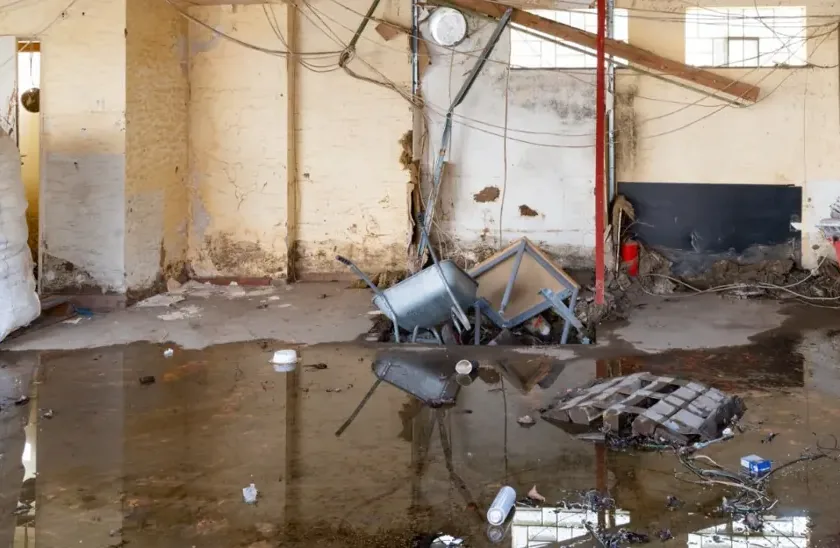
The sump collects groundwater from the drain tile around the foundation and pumps it outside. When that pump stops during a thaw or a storm, the pit overflows and water spreads from the pit across the floor, usually under the carpet pad first.
What to do first for sump pump failure cleanup
- 1
Check the power
A tripped breaker or outage is the most common cause; reset only from a dry panel.
- 2
Free the float
If it is stuck against the pit wall, a nudge may restart the pump.
- 3
Bail or rent a pump
Keep the pit from overflowing further if it is safe to do so.
- 4
Lift and photograph
Move items off the floor and document the damage for the claim.
What does sump pump failure cleanup cost in Hopkins, MN?
In Hopkins, sump pump failure cleanup typically runs $1,800 to $11,000, depending on how much of the basement flooded, whether it is finished and how long the water sat before extraction.
Unfinished, under an inch
$1,800 to $3,500- Extraction
- Slab drying
- Daily readings
Finished rooms affected
$3,500 to $7,000- Pad replaced
- Lower drywall cut
- Wall cavity drying
Whole basement
$7,000 to $11,000- Carpet removed
- Antimicrobial
- Extended equipment
These are typical figures, not a quote. Water category, wet square footage, material class and how quickly drying began move the total the most. The water damage cost calculator gives a closer range for your rooms.
How sump pump failure cleanup is done, start to finish
Moisture gets mapped before a single fan is placed, so the plan follows what is actually wet. The drying team leaves the equipment running until meter readings reach the goal, whatever the surface looks like.
- 1
Confirm the pit is handled
The crew checks that the water level is controlled before extraction.
- 2
Extract
Standing water is removed from carpet, pad and concrete.
- 3
Remove and open
Wet pad and drywall come out where meters show water.
- 4
Dry and log
Dehumidifiers and air movers run until readings reach the goal.
Why sump pumps fail when they are needed most
The heaviest demand comes during spring snowmelt and slow summer thunderstorms, the same weather that knocks out power. Minnesota winters add a problem warmer states rarely see: a discharge pipe that freezes outside, so the pump runs but the water has nowhere to go.
- Power outages during storms, with no battery backup.
- A float switch stuck against the pit wall or a worn switch.
- A frozen or clogged discharge pipe, or a pump that is simply worn out.
Extraction and drying after an overflow
Sump water is groundwater, but once it crosses a basement floor it picks up dirt and whatever sat on the slab, so it is usually treated as Category 2. The extraction crew removes standing water, pulls wet carpet pad, and checks the drywall and bottom plates of finished walls with meters.
- Carpet may be dried if it was extracted quickly; the pad is usually replaced.
- Drywall is cut only where readings show water wicked upward.
- LGR dehumidifiers run until the slab and framing reach the goal.
Getting the pump back in service
A plumber or waterproofing contractor repairs or replaces the pump and discharge. A battery backup and an alarm are common upgrades. Ready.gov power outage guidance covers preparing for outages, and Ready.gov flood guidance covers safe re-entry. See basement flooding cleanup for seepage that comes in through the walls.
Sump pump failure cleanup around Hopkins and west Hennepin County
The restoration crew works both ZIPs, 55343 and 55305, from Mainstreet and the Avenues out to Interlachen Park, Hobby Acres, Park Valley and the Blake Road side of Minnehaha Creek.
Nearby coverage reaches Minnetonka, Edina, St. Louis Park, Plymouth, Orono.
Other water problems handled here
Sump Pump Failure Cleanup questions in Hopkins, MN
My sump pump is running but the basement still flooded. Why?
A frozen or clogged discharge pipe, a check valve failure or a pump too small for the inflow can all let the pit overflow while the motor runs.
Is sump pump overflow covered by insurance?
Many policies treat it like sewer and drain backup and cover it only with an endorsement. Coverage depends on your policy, so check with your own insurer.
Is sump water dirty?
It starts as groundwater, but after spreading across a basement floor it is usually treated as Category 2 and the area gets antimicrobial treatment.
Can the carpet be saved?
Carpet extracted quickly from clean groundwater can sometimes be dried. The pad underneath is usually replaced.
Do I need a battery backup?
In storm season, power outages are a leading reason pumps stop. A plumber can recommend a battery or water-powered backup.
How long will the basement take to dry?
Usually three to five days after extraction, longer for a thick slab, plaster or long-wet walls.
Sump pump quit? Call before the water spreads.
Groundwater keeps coming while the pump is down. The extraction crew removes it and the drying follows.
(888) 432-4933Dry the basement after a sump failure- Active water treated as urgent, 24/7
- Drying goal set by IICRC S500
- Moisture logs kept for the adjuster
- Find us on Google