Water Heater Leak Cleanup in Hopkins, MN
A failed water heater can empty its tank and keep refilling from the supply until the cold-water valve is closed. The extraction crew removes the water from the utility room and every finished space it reached, then the drying begins.
(888) 432-4933Clean up the water heater leak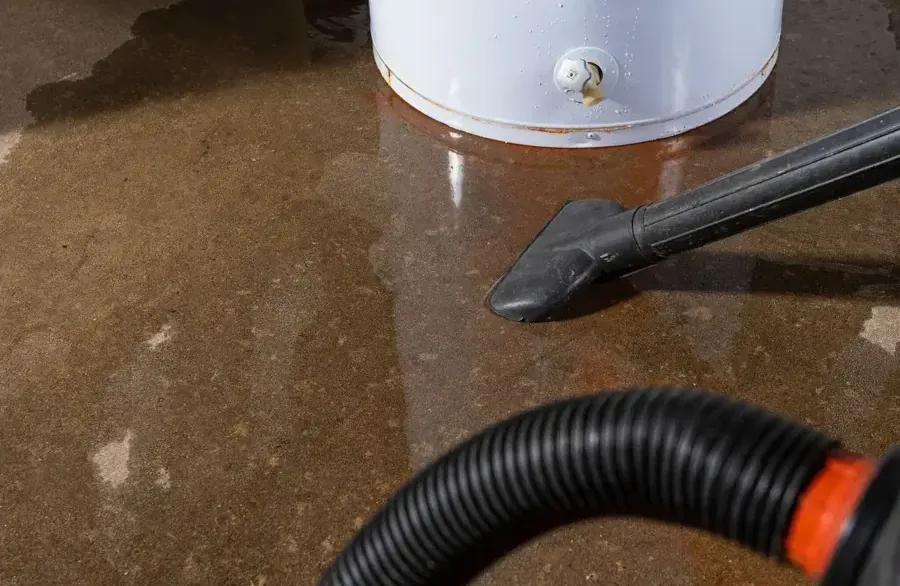
In most local homes the water heater sits in the basement utility room, often a few feet from a finished family room. A tank that rusts through or a relief valve that discharges sends water across the slab and under the nearest wall.
What to do first for water heater leak cleanup
- 1
Close the cold-water valve
On the pipe at the top of the heater.
- 2
Turn off gas or power
Set a gas heater to off or pilot; switch off the breaker for electric.
- 3
Keep clear of hot water
Water from a tank can scald; let it cool before handling.
- 4
Move stored items
Lift boxes off wet concrete and photograph the damage.
What does water heater leak cleanup cost in Hopkins, MN?
In Hopkins, water heater leak cleanup typically runs $1,000 to $6,500, depending on how much water escaped, whether it reached finished rooms and how long it sat before drying started.
Utility room only
$1,000 to $2,200- Extraction
- Slab drying
- Daily readings
Next room affected
$2,200 to $4,500- Pad replaced
- Bottom plates dried
- Drywall vented
Several finished rooms
$4,500 to $6,500- Lower drywall cut
- Contents moved
- Extended equipment
These are typical figures, not a quote. Water category, wet square footage, material class and how quickly drying began move the total the most. The water damage cost calculator gives a closer range for your rooms.
How water heater leak cleanup is done, start to finish
Moisture gets mapped before a single fan is placed, so the plan follows what is actually wet. The drying team leaves the equipment running until meter readings reach the goal, whatever the surface looks like.
- 1
Valve and power checked
The crew confirms the water and the energy source are off.
- 2
Extraction
Water is pulled from the slab, carpet and pad.
- 3
Open what is wet
Pad and lower drywall are removed where readings call for it.
- 4
Dry and document
Dehumidifiers run until the slab and walls reach the goal.
How water heaters fail
Tank water heaters typically last eight to twelve years. Sediment and corrosion wear through the bottom of the tank, while fittings, the drain valve and the temperature and pressure relief valve can leak at any age. City water in Hopkins measures about 21 grains of hardness per gallon, which speeds sediment buildup, so many homes here run a water softener.
- A slow drip at the base that becomes a steady leak.
- A relief valve discharging because of high temperature or pressure.
- Supply connections and the drain valve.
Drying the basement around the tank
Water from the tank runs along the slab to the lowest point, under bottom plates and into carpet pad in the next room. The tech who does the walkthrough maps the wet area with meters, then the drying team extracts, pulls wet pad and dries walls and the slab with dehumidifiers and air movers.
- Bottom plates and lower drywall checked in every adjoining room.
- Carpet pad near the utility room usually replaced.
- Stored boxes and contents moved off wet concrete and photographed.
Shutting it down safely
Close the cold-water valve on top of the heater, then turn off the gas or the breaker. A plumber replaces the tank; the restoration team dries what it soaked. EPA WaterSense lists ways to spot leaks early, and the EPA mold page explains why a slow leak behind stored boxes matters. See basement flooding cleanup when water came from outside instead.
Water heater leak cleanup around Hopkins and west Hennepin County
The restoration crew works both ZIPs, 55343 and 55305, from Mainstreet and the Avenues out to Interlachen Park, Hobby Acres, Park Valley and the Blake Road side of Minnehaha Creek.
Nearby coverage reaches Minnetonka, Edina, St. Louis Park, Plymouth, Orono.
Other water problems handled here
Water Heater Leak Cleanup questions in Hopkins, MN
How long do water heaters last?
Tank models typically last eight to twelve years. Sediment, hard water and a worn anode rod shorten that.
Is water heater leak damage covered?
Sudden discharge is often covered, but the tank itself and slow leaks usually are not. Coverage depends on your policy, so check with your own insurer.
Is water from the tank clean?
It starts as clean water, but after crossing a basement floor and soaking stored items it can degrade to Category 2.
Who replaces the water heater?
A plumber replaces the tank and checks the venting and gas connections. The restoration team handles the water damage.
Why is the floor in the next room wet?
Water runs under the bottom plate of finished walls and spreads through carpet pad, often farther than it looks.
How long does drying take?
Two to five days for most utility room leaks, longer when water soaked carpet and drywall in finished rooms.
Tank leaking into the basement? Call now.
A failed tank keeps refilling until the valve is closed. The extraction crew removes the water and starts drying the rooms it reached.
(888) 432-4933Dry the utility room- Active water treated as urgent, 24/7
- Drying goal set by IICRC S500
- Moisture logs kept for the adjuster
- Find us on Google