Ice Dam Water Damage in Hopkins, MN
When a ridge of ice forms at the eaves, meltwater backs up under the shingles and runs into exterior walls and ceilings. The drying team follows that water from the roof edge down and dries the structure it soaked.
(888) 432-4933Stop ice dam water damage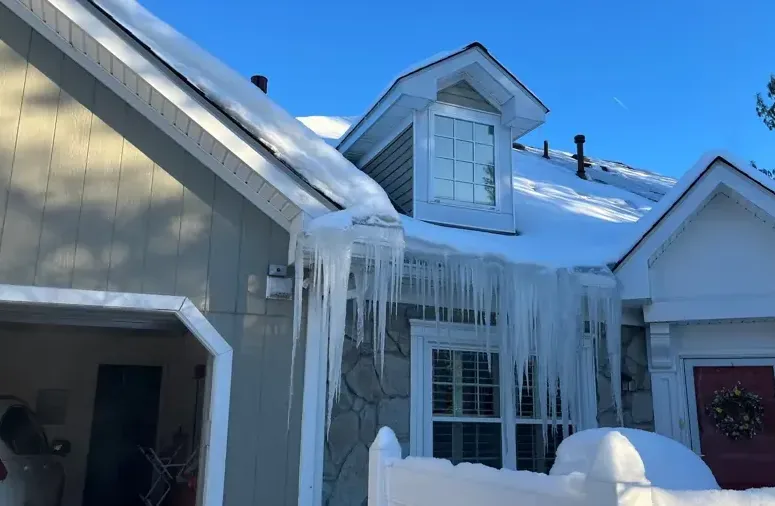
Ice dams are a winter fixture in the Twin Cities. Heat escaping into the attic melts snow on the upper roof, the water runs down to the cold overhang and freezes, and the ridge of ice traps the next round of meltwater against the shingles.
What to do first for ice dam water damage
- 1
Catch the drip
Buckets and towels under the leak, furniture moved away from the wall.
- 2
Cut power to wet fixtures
Ceiling lights and outlets near the leak, from a dry panel.
- 3
Stay off the roof
Never chip ice from a ladder or roof; leave that to a roofer.
- 4
Photograph inside and out
The ice ridge, the stains and the wet areas, for the claim.
What does ice dam water damage cost in Hopkins, MN?
In Hopkins, ice dam water damage cleanup typically runs $1,200 to $9,000, depending on how many walls and ceilings the meltwater reached, how much insulation is soaked and how long the leak went on.
One wall or window head
$1,200 to $3,000- Moisture mapping
- Drying in place
- Daily readings
Ceiling and exterior wall
$3,000 to $6,000- Insulation removed
- Drywall opened
- Cavity drying
Several rooms
$6,000 to $9,000- Attic insulation pulled
- Multiple drying zones
- Extended equipment
These are typical figures, not a quote. Water category, wet square footage, material class and how quickly drying began move the total the most. The water damage cost calculator gives a closer range for your rooms.
How ice dam water damage is done, start to finish
Moisture gets mapped before a single fan is placed, so the plan follows what is actually wet. The drying team leaves the equipment running until meter readings reach the goal, whatever the surface looks like.
- 1
Map the meltwater
Thermal imaging finds wet ceilings and wall tops beyond the visible stain.
- 2
Remove what is soaked
Wet insulation and drywall come out where readings require.
- 3
Dry the framing
Air movers and dehumidifiers dry studs, headers and joists.
- 4
Confirm and log
Readings are logged daily until the structure is dry.
Why an ice dam leak shows up indoors
Trapped meltwater works under shingles and past the roof edge into the top of exterior walls. Inside, it shows as stains at the top of walls and window heads, wet drywall along the ceiling line, peeling paint or water dripping from a window frame, and it often keeps going on sunny days after a snow.
- Stains where the ceiling meets an exterior wall.
- Water at the top of window and door frames.
- Wet attic insulation along the eaves; see ceiling leak water damage for leaks from inside sources.
Drying walls and ceilings the ice soaked
Exterior walls hold insulation that soaks up meltwater and dries slowly. The tech who does the walkthrough maps the wet ceiling and wall areas with thermal imaging and meters; the drying team then removes soaked insulation and drywall where readings require and dries the framing with air movers and dehumidifiers.
- Fiberglass and cellulose insulation that is soaked is removed, not dried.
- Window frames and headers are checked for hidden water.
- Daily readings continue until the framing reaches the goal.
The roof and the attic are separate jobs
Removing the ice and fixing attic air sealing, insulation and ventilation are work for a roofer or insulation contractor; the restoration team handles the water inside. Ready.gov winter weather guidance covers storm safety, and the EPA moisture guide explains why wet insulation should not be left in place.
Ice dam water damage around Hopkins and west Hennepin County
The restoration crew works both ZIPs, 55343 and 55305, from Mainstreet and the Avenues out to Interlachen Park, Hobby Acres, Park Valley and the Blake Road side of Minnehaha Creek.
Nearby coverage reaches Minnetonka, Edina, St. Louis Park, Plymouth, Orono.
Other water problems handled here
Ice Dam Water Damage questions in Hopkins, MN
Why does water come in on sunny winter days?
Sun and attic heat melt snow above the ice dam, and that water backs up behind the ice. Leaks often run hardest on bright days after a snowfall.
Is ice dam damage covered by insurance?
Many homeowner policies cover interior water damage from ice dams, but the wording varies. Coverage depends on your policy, so check with your own insurer and photograph the ice and the stains.
Can wet insulation dry out?
Soaked insulation compresses and holds water against the framing, so it is usually removed and replaced after the cavity dries.
Should I chip the ice off myself?
No. Chipping damages shingles and ladder work on icy roofs is dangerous. A roofer can steam or remove the ice safely.
What stops ice dams from coming back?
Air sealing and insulating the attic floor and improving roof ventilation keep the roof deck cold so snow does not melt unevenly. That is roofing and insulation work.
How long does an exterior wall take to dry?
Usually three to six days once wet insulation is out and air is moving through the cavity. Plaster and thick trim take longer.
Meltwater coming through the wall? Call now.
Every warm afternoon sends more water past an ice dam. The drying team finds where it went and dries the structure.
(888) 432-4933Dry the ice dam damage- Active water treated as urgent, 24/7
- Drying goal set by IICRC S500
- Moisture logs kept for the adjuster
- Find us on Google