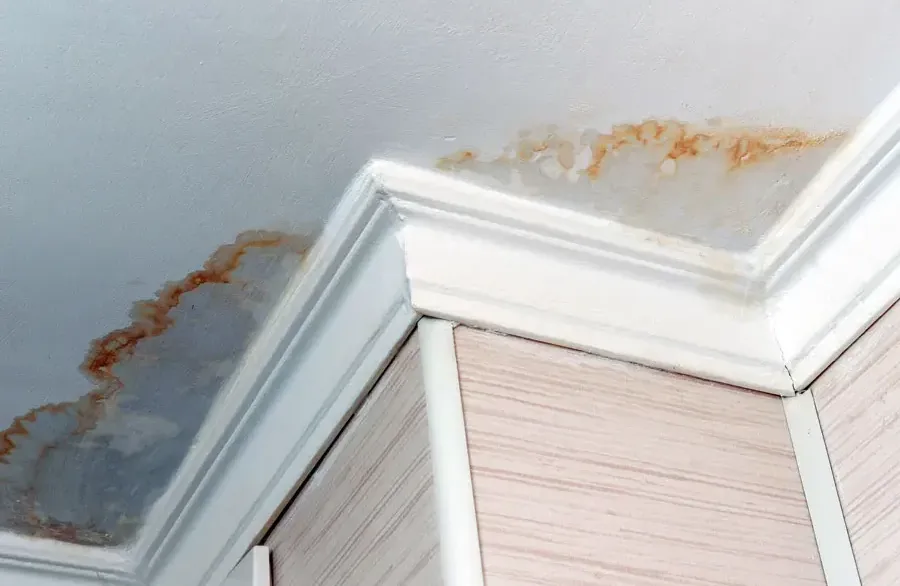
Roughly six in ten Hopkins homes are rentals, and many are in large apartment buildings. That makes a stained, dripping or sagging ceiling a common sign that the water started in the unit above.
Key takeaways
- In a large building, a ceiling leak usually starts one floor up: a supply pipe, a drain, an appliance or an overflowing tub.
- A bulging ceiling is holding water, so people and furniture stay out from under it.
- The building manager shuts off the source, and the restoration crew removes the water that is already in the unit.
- Water moves through shared ceilings, walls and floors, so each affected unit is dried and logged on its own readings.
- Dated photos taken before anything is moved give tenant and owner the same record.
Why a leak travels between units
In a stacked building, the units share ceilings, floors and wall cavities. Water that escapes from one bathroom or kitchen follows the framing downward and sideways, and it can show up several doors from its source.
A drip that begins as a small stain is a classic ceiling leak, but the real damage is often hidden above the drywall.
The longer insulation stays wet, the heavier it gets, which is how a small leak becomes a sagging or collapsed ceiling. Speed matters most in the first day.
- A supply hose or shutoff valve under a sink or behind a toilet.
- A dishwasher or washing machine hose in the unit above.
- A tub or sink that overflowed while the tap was left running.
- A water heater in a closet that started to leak.
- A supply or heating pipe inside a shared wall.
What a tenant does in the first hour
The first steps
The goal is to limit harm to people and belongings while the source is found. A ceiling that holds water is heavy, and releasing it is safer left to the crew.
- Keep everyone out from under a bulging or sagging ceiling.
- Leave lights and outlets near the wet area switched off.
- Move furniture, electronics and papers out of the drip zone.
- Take photos and short video of the ceiling, walls, floor and belongings before moving them.
- Tell the building manager or owner right away, in writing if possible, so the report carries a date and time.
Belongings: what to move and what to leave
People come first, then valuables, then everything else. A short, calm sequence beats grabbing at random.
- Unplug electronics near the wet area only if the outlet and the cord are dry.
- Set wooden furniture legs on blocks or foil so wet carpet does not stain the wood.
- Lift rugs and curtains that touch the wet floor or wall.
- Leave soaked drywall, insulation and ceiling tiles for the crew.
- Set aside photos, documents and medicines in a dry bag or a dry room.
What a manager or owner does next
Stop the source
The manager shuts off water to the unit above, or to the building if the source is not clear. A plumber then repairs the failed part, and the floor of the upper unit is checked for wet subfloor too.
Trace the source
Finding the source can take more than a quick look. A ceiling stain in one unit may start at a fitting two floors up, or inside a wall cavity that no one can see.
Moisture readings and thermal images help follow the water back to where it began, and a leak that is only patched at the stain tends to return.
Bring in water removal
While the repair is arranged, a crew can pull standing water from the lower unit. Water on the floor and wet insulation above the ceiling are the first targets.
Questions a tenant can ask the manager
A short list of questions keeps the repair on track and avoids misunderstandings.
Answers in writing keep tenant, manager and crew working from the same information.
- Where did the water come from, and has it been shut off?
- Which units were affected, and will each one be checked?
- When will the ceiling be opened and the equipment set up?
- Who will repair the failed part, and who will rebuild the ceiling?
- How will access be arranged if the tenant is not home?
How drying works across several units
Mapping and drying
A ceiling leak is rarely a one-room job. The crew maps moisture in every unit the water touched, starting with the ceiling and walls just below the source.
That mapping is the heart of structural drying, because wet framing that is missed can stay damp for weeks.
- Wet ceiling drywall is opened where it sags or stays damp, so the cavity above can dry.
- Wall cavities and insulation are checked with a moisture meter, not by touch.
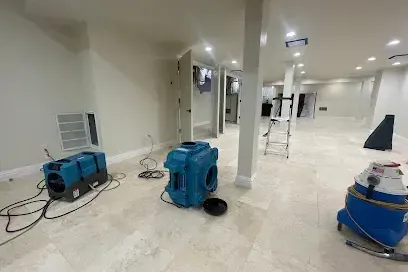
- Fans and dehumidifiers go into each unit, set up from the readings taken in that unit.
- Daily readings are logged per unit until the framing reaches the dry standard.
Signs the water is still moving
A stain that grows after the first day means water is still reaching the ceiling. The manager should be told right away, and the crew rechecks the readings.
- A new stain that appears a day or two later.
- A ceiling that darkens after someone uses the shower upstairs.
- Paint that bubbles or peels near the stain.
- Carpet that stays wet along the wall below the leak.
Living in a unit during the dry-out
Equipment hums and the rooms can feel warm and dry while the work goes on. A rough range for the dry-out comes from the drying time estimator, and the readings set the real end date.
- Keep fans and cords where the crew placed them, because moving them changes how air flows through the wet area.
- Report new stains, drips or smells to the manager.
- Stay out of rooms where the ceiling has been opened.
Why records matter in a rental city
With so many homes rented, a single leak often involves a tenant, a landlord and a neighbor. Dated photos, a written report and per-unit readings give all three the same facts.
The restoration team documents the water and the drying, not who is at fault. Questions about the lease or about who pays belong with the owner and the tenant.
For multi-unit buildings, apartment and condo water damage work follows this same unit-by-unit record.
Questions
Who is responsible for ceiling damage from the unit above?
That depends on the lease and on what caused the leak. The restoration team documents and dries the damage, and the owner and tenant sort out responsibility.
Can a wet ceiling dry without being opened?
Sometimes a light stain dries in place. A ceiling that sags or stays damp usually has to be opened so the cavity above can dry, and moisture readings decide.
Does the unit above need work too?
Often yes. The floor and the pipes there are checked so the source is fully found and any wet subfloor is dried.
What if the neighbor above is not home?
The building manager can arrange access so the water can be shut off. Tenants do not usually enter another unit on their own.
Is a ceiling stain always from a pipe?
No. A roof leak or condensation can leave a similar stain, which is why the source is traced before any repair is planned.
How long before a unit is usable again?
A dry-out often takes a few days, but it depends on how wet the structure got. The readings say when it is dry, and rebuilding comes after.