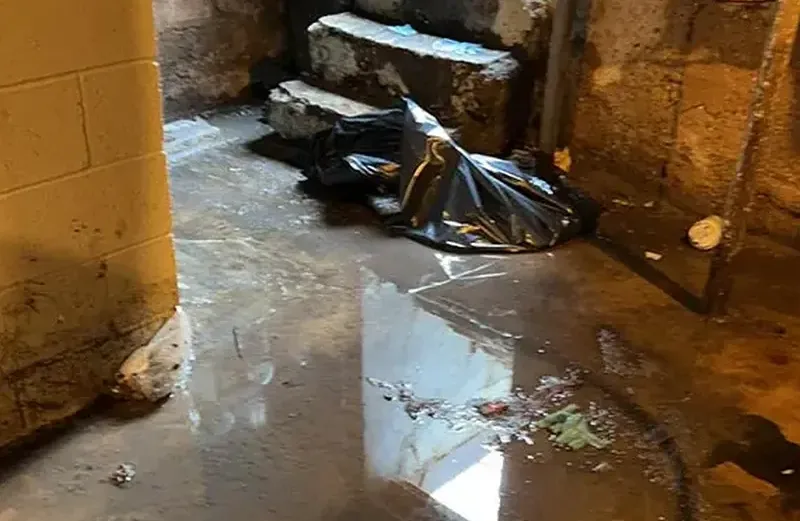
Orono, a Hennepin County city on the north shore of Lake Minnetonka, has city sewer in only part of town. Whether a backup starts in a city sewer or a private septic system changes who gets the first call and what gets repaired.
Key takeaways
- City sanitary sewer serves the Navarre area and the area around the Highway 12 corridor, and the rest of the city uses privately owned septic systems.
- Owners on the city sewer maintain the pipe from the building to the main in the street, and a plumber or sewer cleaning contractor handles any cleaning of it.
- Lift stations pump wastewater from low points, and if one stops, wastewater can back up into nearby homes; alarms are reported to Public Works.
- A septic backup is a job for a septic contractor, while a restoration crew handles the water and the damage inside the house.
- Inside the house, sewage water is Category 3 either way: contained, removed and disinfected.
Two systems in one city
The city runs a sanitary sewer system with 1,188 manholes and 46 lift and grinder stations. That system serves the Navarre area and the area around the Highway 12 corridor.
Everywhere else, homes rely on privately owned septic systems. A basement with sewage in it can start in either system, and the next steps are different.
Orono is the largest city by area on Lake Minnetonka, it is largely residential, and a large part of its total area is water. Many homes sit close to the lake, which makes it more important to know early which system is involved.
- Who maintains the failed part: the owner, the city or a septic contractor.
- Who is notified: Public Works for a lift station alarm, a septic contractor for a tank.
- What the cleanup crew needs to know about the source before work starts.
How to tell which system a home uses
The answer is tied to the address, not to the size or age of the house.
Addresses in the sewer areas
The Navarre area and the Highway 12 corridor are the parts of town on city sewer. An owner in or near those areas can ask the city to confirm that a specific address is connected.
Everywhere else
Outside those areas the home uses a private septic system, which the owner maintains. Paperwork from the purchase of the home or a septic contractor's records may show where the tank sits.
When the source is not known, the cleanup crew treats the water as sewage until it is proven otherwise.
Homes on city sewer: the owner's pipe and the lift stations
The owner's part
Owners of homes and businesses on the city sewer maintain the sewer pipe from the building to where it meets the main in the street. If it needs cleaning, a plumber or a sewer cleaning contractor does the work.
Public Works cleans about one fifth of the city's sanitary sewer pipes each year, and pipes that need more care are cleaned every year.
Lift stations
Lift stations pump wastewater up from low points in the system. If one stops working, wastewater can back up into nearby homes, so the city asks residents to report alarms.
- A red light or a buzzer at a lift station is an alarm.
- The city asks that alarms be reported to Public Works.
- Several homes near the same station with the same problem point to the station, not to one private pipe.
When the city should be told
A backup that hits several homes near the same station at the same time is not a private pipe problem. Reporting it quickly lets Public Works check the station and the main.
- Say how many homes nearby are affected, if that is known.
- Describe which fixtures backed up and roughly when it started.
- Mention any alarm light or buzzer at a station in the neighborhood.
Homes on septic: what a backup means
A septic backup tends to show as slow drains, gurgling and sewage in the lowest tub or drain. The tank and the field behind it are a job for a septic contractor, not for a cleanup crew.
The restoration crew handles what the system pushed into the house: contaminated water, soaked flooring and affected walls.
Once the septic contractor has found the cause, the drains and fixtures that were involved are cleaned and disinfected, and the rooms that took water are dried. The order matters: stop the source first, then clean, then dry.
- Stop running water in the house, including the washing machine and dishwasher.
- Keep people and pets out of the affected rooms.
- Call a septic contractor to look at the system.
- Call for indoor cleanup so the sewage water does not spread into more material.
- Photograph the damage before anything is moved or thrown out.
Cleanup inside the house is the same either way
Sewage water carries bacteria, so it is classed as Category 3 whether it came from a lift station, a city main or a septic tank.
Contain and remove
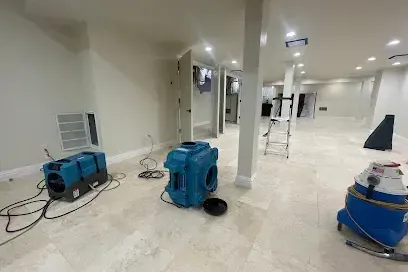
The crew isolates the area, pumps out the water and removes porous materials such as carpet, pad and low drywall. That is the core of sewage backup cleanup for homes on either system.
Disinfect and dry
Hard surfaces are cleaned and disinfected, and the structure is dried with readings taken daily. When the water spread across a whole level, the job overlaps with basement flooding cleanup.
What the owner keeps on record
A short record helps whoever repairs the source and whoever cleans the house.
- The date and time the backup was first noticed.
- Which drains and fixtures were involved.
- Photos of the water, the floor and the damaged items.
- A list of everyone called: Public Works, a plumber, a septic contractor or a cleanup crew.
Heavy rain, high groundwater and the sewer
The city says excess clear water in the sanitary sewer during high groundwater or heavy rainfall can cause basement flooding, or send raw wastewater to local streams and lakes.
That is why sump pumps, roof drains and foundation drains must not be connected to the sanitary sewer. They should drain to the storm sewer or onto the ground away from the house.
Other water problems in town are covered under water damage restoration.
- Check where the sump pump discharges, and keep it away from the sanitary sewer.
- Point downspouts away from the foundation.
- Report a lift station alarm to Public Works instead of waiting to see whether it clears.
Questions
How can an owner tell whether a home is on city sewer?
Only the Navarre area and the area around the Highway 12 corridor are served. For a specific address near those areas, the city can confirm whether it is connected.
Who handles a lift station alarm?
The city asks that alarms, a red light or a buzzer, be reported to Public Works.
Is a septic backup cleaned differently from a city sewer backup?
Inside the house the work is the same, because sewage water is Category 3 either way. The difference is who repairs the source.
Who maintains the sewer pipe on a city sewer property?
The owner maintains the pipe from the building to where it meets the main in the street, and hires a plumber or sewer cleaning contractor if it needs cleaning.
Can a sump pump drain into the sewer?
No. City rules say sump pumps, roof drains and foundation drains should not connect to the sanitary sewer.