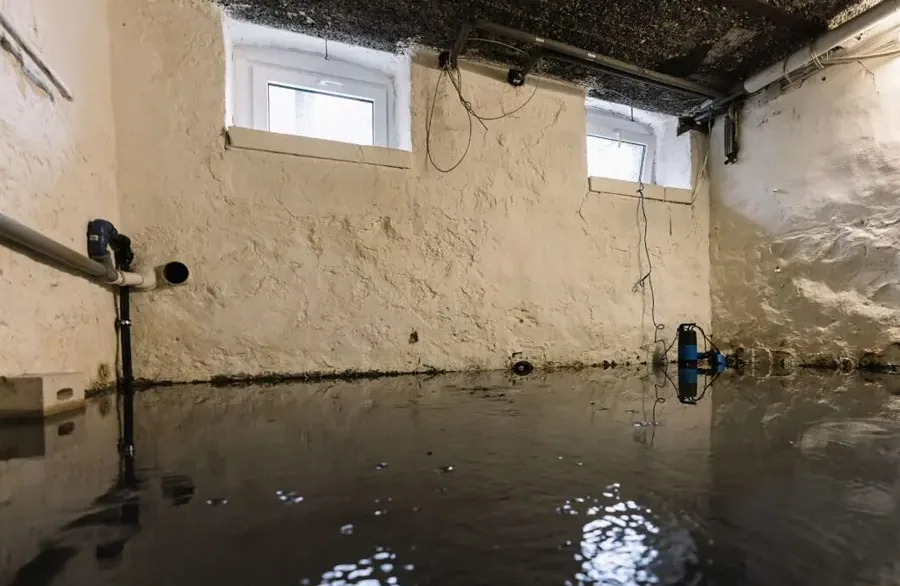
A damp basement wall in Edina can come from a pipe, but it can also come from the ground. The city's own flood strategy treats groundwater seepage as one of the main ways basements take on water.
Key takeaways
- The city describes structural flooding as happening three ways: over the land surface, through groundwater seepage into basements and through sanitary sewer backflow.
- The city's Flood Risk Reduction Strategy is dated April 7, 2020, and a resident Task Force began work in July 2019.
- The years 2015 to 2019 were the wettest in Minnesota history, and 2019 was a record year for precipitation.
- Where the water table is shallow, structures with basements face a higher risk of groundwater seepage.
- The city lists a basement sump pump, proper grading and downspouts among ways to reduce a home's vulnerability.
Three ways water gets into an Edina basement
The city sorts structural flooding into three paths, and each calls for a different first move.
Over the land surface
Rain runs across lawns and drives, finds a window well or a low door and pours in. The water is usually muddy and shows up during or just after a storm.
Seepage from the ground
Groundwater pushes through floors and walls from below and the sides. It can be slow, a damp edge at first, and it often outlasts the rain by days.
Sanitary sewer backflow
A sewer that fills can send water back up through a floor drain or toilet. That path is handled as sewage, not as clean water.
Telling the three paths apart in the first hour changes the response. Surface water means checking the yard and window wells, seepage means checking the sump pump and the walls, and backflow means treating the water as sewage.
What the city's flood strategy says about groundwater
The city published a Flood Risk Reduction Strategy dated April 7, 2020, developed with a resident Task Force that began work in July 2019.
The strategy points out that the years 2015 to 2019 were the wettest in Minnesota history, and that 2019 was a record-breaking precipitation year.
A groundwater monitoring well near Bredesen Park had risen about 15 feet from its level in 2010, according to Nine Mile Creek Watershed District data cited in the strategy. Where the water table is shallow, structures with basements face a higher risk of seepage.
For a homeowner, the takeaway is practical. Rain measured in totals over a day or a season can matter more than any single storm, because wet ground has less room for the next one.
Seepage or a plumbing leak?
A leak and a seep can look the same for the first hour. The pattern over a few days is what separates them.
If the plastic test is unclear, moisture readings along the base of the wall settle it. A crew reads several points, not one, because seepage is rarely even.
- A leak keeps running at the same rate whether it rained or not; seepage follows the weather and the season.
- Seepage tends to appear along the base of walls or at the floor joint, while a pipe leak tends to wet one spot near a fixture or a pipe run.
- Water that appears across several walls at once points to the ground, not to a single pipe.
- A water meter that moves while every fixture is off points to a pipe leak.
- Silt or a chalky film on the floor points to outside water.
- Tape a square of plastic sheeting to a damp wall for a day: moisture under the plastic points to seepage through the wall, and moisture on the outside of it points to humid room air.
Morningside: where the city's study looked
Morningside was the focus area of the city's flood study because of its existing modeling and research.
Per 2019 city data, the neighborhood has added nearly one million square feet of impervious surface from 1950 on, about 14 percent of occupied parcel size. More hard surface means less ground to soak up rain.
The lesson reaches beyond one neighborhood. More roof, pavement and compacted ground anywhere sends more rain toward low spots and foundations.
- The city's flood modeling used a 5-year storm of 3.6 inches in 24 hours.
- It also used a 100-year storm of 7.5 inches in 24 hours.
- The gap between those two storms shows how much more water a rare event can send toward a basement.
Sump pumps, grading and downspouts
The city's strategy lists a basement sump pump, proper grading and downspouts among ways to reduce a home's vulnerability to flooding.
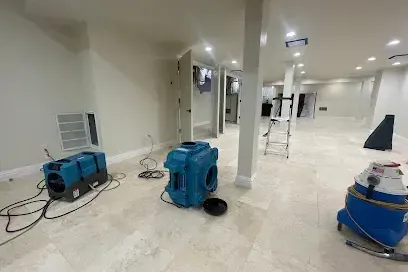
A pump that fails during a wet spell leaves the basement with nothing between it and the groundwater, which is the job of sump pump failure cleanup.
A pump can fail from a stuck float, a dead motor, a power outage or a blocked discharge pipe. During a long wet spell the pit can overflow quickly, so the signs of trouble are worth knowing.
- Test the pump before the wet season and listen for it running.
- Keep the discharge pipe clear and pointed away from the house.
- Slope the soil so it falls away from the foundation.
- Extend downspouts so roof water lands well away from the walls.
- A pump that runs constantly without lowering the water in the pit.
- A pump that never runs, even when the pit is full.
- Grinding, rattling or a motor that hums without pumping.
Drying a basement after seepage
Find the source
The crew checks readings along the walls and floor to map where the water entered. That map shows whether the problem is seepage, surface water or a pipe.
Remove the water and the wet materials
Standing water is pumped out, and wet carpet, pad and low drywall that cannot be saved are removed. For a whole-level event, the work falls under basement flooding cleanup.
Dry the structure
Concrete and framing hold water longer than they appear to, so structural drying continues until readings come down to the dry standard. For other water problems in the area, see water damage restoration.
What the crew leaves behind
A finished job comes with a record: photos, moisture readings and a list of what was removed. That record shows the owner when the structure reached the dry standard and what changed along the way.
Questions
How does the city describe flooding in Edina?
The city describes structural flooding as happening three ways: over the land surface, through groundwater seepage into basements and through sanitary sewer backflow.
What is the Flood Risk Reduction Strategy?
It is a city document dated April 7, 2020, developed with a resident Task Force that began work in July 2019.
Does a shallow water table raise basement risk?
Yes. Where the water table is shallow, structures with basements face an increased risk of flooding from groundwater seepage.
What does the city suggest to reduce a home's vulnerability?
The strategy lists a basement sump pump, proper grading and downspouts among the ways to reduce a home's vulnerability to flooding.
How is seepage different from a pipe leak?
Seepage follows the weather and tends to wet the base of several walls, while a pipe leak keeps running in one place regardless of rain.
Should a damp basement wall wait for dry weather?
No. Wet walls and floors keep absorbing moisture and holding it. A prompt check keeps a small seep from becoming a larger drying job.