Basement Flooding Cleanup in Edina, MN
Groundwater, failed sump pumps and storm runoff all find their way into basements here. The extraction crew removes the water, lifts soaked carpet and pad, and dries the slab and lower walls until daily readings reach the goal.
(888) 432-4933Wet basement? Start extraction now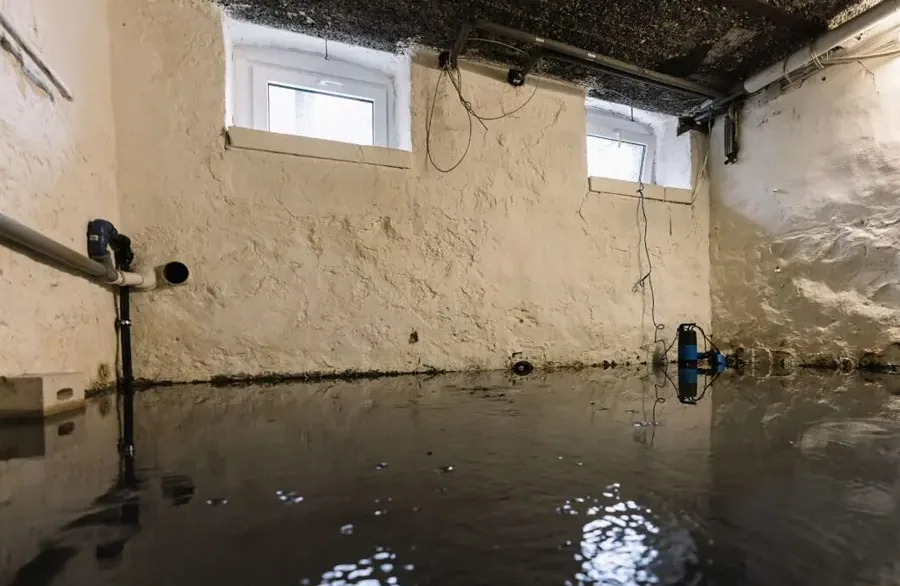
Basements here take on water through paths the city has named: over the land surface, groundwater seepage through walls and floors, or sanitary sewer backflow. The cleanup plan depends on which path it was, and a sewage path changes the safety rules completely.
What to do first for basement flooding cleanup
- 1
Kill the power
Turn off basement circuits at the panel only if the floor around it is dry, else call for help.
- 2
Check the sump
Check whether the pit is full and the pump is cycling, then clear a blocked floor drain.
- 3
Move what you can
Lift boxes, rugs and electronics onto dry surfaces; leave heavy furniture in place.
- 4
Photograph the water
Take dated photos of the water depth, wall marks and each damaged item before pumping.
What does basement flooding cleanup cost in Edina, MN?
A shallow unfinished basement typically runs $2,000 to $4,500, a finished one $4,500 to $9,000, and a whole level or gray water $9,000 to $15,000, depending on depth and exposure.
Bare slab, shallow water
$2,000 to $4,500- Water pulled out
- Slab dried
- Daily readings
Finished lower level
$4,500 to $9,000- Pad and carpet out
- Wall base cut
- Cavities dried
Whole level or gray water
$9,000 to $15,000- Antimicrobial pass
- Longer equipment run
- Contents inventory
These are typical figures, not a quote. Water category, wet square footage, material class and how quickly drying began move the total the most. The water damage cost calculator gives a closer range for your rooms.
How basement flooding cleanup is done, start to finish
Moisture gets mapped before a single fan is placed, so the plan follows what is actually wet. The drying team leaves the equipment running until meter readings reach the goal, whatever the surface looks like.
- 1
Trace the source
Meters and a thermal camera map the wet slab and walls before equipment goes down.
- 2
Pull the water
Truck-mounted extraction and submersible pumps clear standing water, then weighted tools work the carpet.
- 3
Open and treat
Soaked pad goes out, lower drywall is cut, and surfaces are treated if the water was unclean.
- 4
Dry to the goal
Air movers and dehumidifiers run until slab and framing readings match dry reference points.
How the crew works out where water entered
Moisture meters and thermal imaging follow the wet area back to its edge, and the floor drain, sump pit and cove joint are checked for the source. Seepage tends to show along the slab perimeter, while runoff leaves a high water mark on the wall. Knowing the path sets the safety level.
- Seepage water is usually clean at first but picks up soil quickly
- Runoff can carry yard debris and needs porous materials checked
- Sewer backflow is contained and cleaned under separate rules
What keeps water out of basements
The city's flood strategy lists a basement sump pump, proper grading and downspouts among the ways to reduce a home's vulnerability. After a loss, the crew notes whether the pit, the discharge and the yard slope contributed, so the same water does not return. Those notes also help an adjuster.
- Check that the pit is clear and the pump cycles
- Point downspouts away from the foundation
- Keep floor drains clear of debris
Morningside, the focus of the city's flood study
Morningside was the focus area of the city's flood study because of its existing modeling and research. Hard surface added there after 1950 leaves rain less ground to soak into, so basements in similar neighborhoods are checked for runoff paths as well as seepage.
- Carpet and pad come up first
- Lower drywall is cut above the wet mark
- Slab and wall cavities are dried to a logged goal
When the water is gone and the readings are flat, the crew removes equipment and hands over the moisture log, which an adjuster can use for the structure and the contents. For the pit itself, see sump pump failure cleanup.
Basement flooding cleanup around Edina and nearby towns
Basement work here reaches ZIPs 55424 and 55436, plus Morningside, Interlachen, Indian Hills, Cahill Village, Chapel Hill and the blocks beside Minnehaha Creek and Highway 62.
The same service nearby: basement flooding cleanup in Hopkins, Minnetonka, Plymouth.
Related water damage services in Edina
Basement Flooding Cleanup questions in Edina, MN
Can groundwater flood a basement without rain?
Yes. Where the water table is shallow, walls and floors can seep after long wet spells, so the crew checks the slab perimeter first.
Should the sump pump be replaced after a flood?
Only once the cause is known. A pump that cycled but could not keep up needs a different fix than one that lost power or jammed.
Is basement flood water always contaminated?
No. Seepage is often clean at first but picks up soil quickly, while runoff or sewer backflow is treated as contaminated.
What gets removed from a finished basement?
Wet carpet and pad come up first, then drywall is cut above the wet mark. Hardwood, cabinets and framing are tested and dried in place when readings allow.
How long does equipment stay in the basement?
It stays until slab and framing reach their goal, which depends on how deep the water was and how long it sat.
Who handles a sewer backup in a basement?
That is a sewage loss, so it is contained and cleaned under protective protocols described on the sewer backup cleanup page.
Stop the seepage from spreading in Edina
A dry slab and clean documentation both start with the first call, whatever hour the water showed up, weekday or weekend.
(888) 432-4933Call about basement water- Active water treated as urgent, 24/7
- Drying goal set by IICRC S500
- Moisture logs kept for the adjuster
- Find us on Google