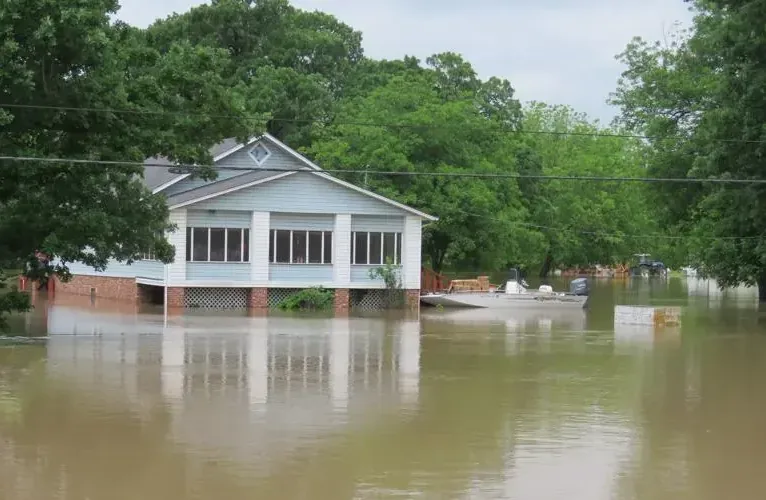
The city includes the eastern tip of Lake Minnetonka, and the outlet of the lake is Minnehaha Creek. When rain and snowmelt push both up, homes close to the water feel it first.
Key takeaways
- Minnehaha Creek begins at Gray's Bay Dam, the lake outlet, and the current dam was built by the Minnehaha Creek Watershed District in 1979 to address flooding.
- The dam helps keep the lake near an average level of 929 feet above sea level.
- In June 2014 the lake reached a record 931.11 feet and the creek set a record flow of 889 cubic feet per second.
- Lake and creek water is handled as Category 3: standing water is pumped out, porous materials come out and the structure is dried.
- The city publishes floodplain maps, and work next to a floodplain follows city rules.
How the lake and creek set the water level
The outlet at Gray's Bay Dam
Minnehaha Creek begins at Gray's Bay Dam and flows on through Minnetonka, Hopkins, St. Louis Park, Edina and Minneapolis.
The Minnehaha Creek Watershed District, which is headquartered in the city and covers roughly 29 cities and townships, built the current dam in 1979 to address flooding on the lake and the creek.
What June 2014 showed
The dam helps hold the lake near an average of 929 feet above sea level. In June 2014 the lake reached a record 931.11 feet, a little over two feet higher, and the creek set a record flow of 889 cubic feet per second.
A rise of that size does not stay on the shoreline. It changes how wet the ground is for homes well back from the edge.
For a homeowner, the pattern matters more than the numbers. The lake and the creek are linked, so a wet spring raises both, and the creek carries the lake's overflow downstream.
What high water does to a property near the water
How water reaches the house
A house near the lake or creek usually meets high water in stages.
- Lawns and window wells fill first, and water finds the lowest basement openings.
- Saturated ground can send seepage through basement floors and walls even when no water stands outside.
- Floor drains and sump pits can overflow when the soil around them is full.
- Garages and lower levels at ground height take water directly when the shoreline or creek bank is overtopped.
Surface water
Surface water comes over the land and finds basement openings. Window wells, doors and garage thresholds are the usual paths.
Seepage through floors and walls
Seepage pushes up through the slab or in through walls when the ground is saturated. It can arrive quietly, a damp patch first, then a film of water across the floor.
Both kinds are handled the same way after high water, and knowing which one is at work tells a homeowner where to look for the next problem.
The first day for a home near the water
The first steps
The first hours set the pace for the whole job, and a few steps matter most. A wet basement is also the most common reason for a call about basement flooding cleanup.
- Stay out of the basement until power to it is confirmed off.
- Photograph the water mark and the damaged items before moving anything.
- Raise small valuables, papers and electronics above the water.
- Leave the furnace and water heater off if water has reached them.
- Call for removal early, since water wicks into drywall and wood the longer it sits.
What to write down on day one
These notes turn a stressful day into a clear record the crew can follow.
Do not wait for the water to recede before making the call. Pumping can begin while the yard is still wet, and each day of delay means more material to remove.
- The date and time water first appeared.
- Where it entered, if known: a window well, a floor drain or a wall joint.
- A rough depth, measured against a stair or a wall mark.
- Every room and item the water touched.
- Names and times of everyone called.
How standing water comes out
Extraction comes first
Pumps pull the standing water, working from the lowest point of the floor. Through water extraction, the crew gets the depth down before anything else is judged.
Lake and creek water means removal
Water from a lake or creek carries soil and bacteria, so it is handled as Category 3. Carpet, pad and low drywall that soaked it are removed, while concrete and hard surfaces are cleaned and disinfected.
This is the heart of storm and creek flood cleanup, where the split between salvage and removal depends on the source of the water.
Drying what stays
Framing, subfloor and slab are dried in place with fans and dehumidifiers. Moisture readings show when the structure is dry enough for rebuilding.
After the water is out: cleaning, odor and rebuilding
Pumping is only the opening move. Once the standing water is gone, the work shifts to cleaning what remains and proving the structure is dry.
- Hard surfaces are cleaned and disinfected.
- Odors are addressed after the soaked materials are out.
- Readings are taken again before any wall is closed.
- Rebuilding starts only when the framing and slab read dry.

City floodplain maps and rebuilding rules
The city publishes floodplain maps as a tool for residents, and redevelopment next to a floodplain is subject to city rules.
An owner planning repairs or rebuilding near the water can check those maps and rules before work begins, so the plan fits what the city allows.
Questions about elevation, additions and finished lower levels are easier to answer before work starts than after it.
Beyond the lake: Purgatory Creek and Glen Lake
Purgatory Creek has a long flood history. A grist mill built on it was washed out by a flood soon after it was built.
Glen Lake is a lake and neighborhood area in the south of the city, and the city has run a Glen Lake Neighborhood Study.
Homes near any creek or lake share the same first steps. Stop the hazard, remove the water, then dry the structure.
Other water problems in the area are covered under water damage restoration.
Questions
Is lake or creek water in a basement Category 3?
Yes. Water from a lake or creek carries soil and bacteria, so porous materials that soaked it up are removed and hard surfaces are cleaned and disinfected.
Does a high lake always mean a flooded basement?
No. A high lake raises the risk of seepage and surface water, but each property depends on its grade and drainage. A wet basement after high water is still worth a prompt look.
What is the usual lake level?
The dam helps keep it near an average of 929 feet above sea level. The record, set in June 2014, was 931.11 feet.
Who built the current dam?
The Minnehaha Creek Watershed District built the current Gray's Bay dam in 1979 to address flooding on the lake and the creek.
How fast should standing water be removed?
As soon as it is safe. Water that sits keeps wicking into drywall and framing, which lengthens the dry-out.
Do finished basements dry differently?
They take longer, because there is more material to dry: carpet, pad, drywall, insulation and trim. The crew removes what cannot be saved and dries the rest.