Ice Dam Water Damage in Minnetonka, MN
When snow melts above a warm attic and refreezes at the eaves, trapped water can back up under the shingles and soak the ceiling and wall below. The drying team finds where it traveled and dries each layer.
(888) 432-4933Ask about a leaking roof edge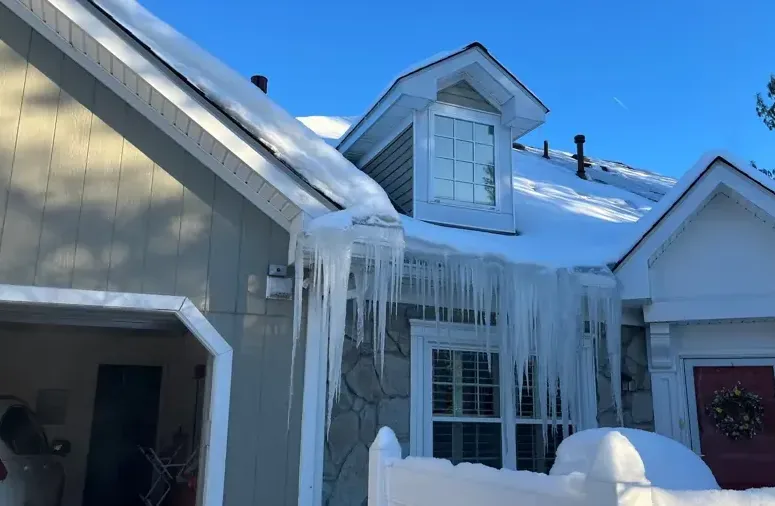
Ice dams are a Minnesota winter roof problem, not a plumbing one. Heat escaping into the attic melts the snow layer, the meltwater runs down and refreezes at the cold eave, and the ridge of ice makes later water back up under the shingles.
What to do first for ice dam water damage
- 1
Stop the indoor drip
Catch water with buckets, move furniture and lift soaked rugs so the damage stays put.
- 2
Protect ceiling fixtures
If water is near a light, switch off that circuit and avoid using it.
- 3
Note the roof edge
Photograph the ice dam, the icicles and the stains inside and outside before any roof work.
- 4
Leave the ice alone
Hammering shingles or gutters adds damage, so removal belongs with a roofer.
What does ice dam water damage cost in Minnetonka, MN?
An ice dam leak limited to one wall or window head often stays near $1,200 to $3,000. A ceiling and exterior wall together land at $3,000 to $6,000, and several rooms reach $6,000 to $9,000.
One wall or window
$1,200 to $3,000- Meter mapping
- Dried in place
- Readings each day
Ceiling and outer wall
$3,000 to $6,000- Insulation pulled
- Drywall opened
- Cavity dried
Several rooms
$6,000 to $9,000- Attic insulation out
- Multiple drying zones
- Extended drying time
These are typical figures, not a quote. Water category, wet square footage, material class and how quickly drying began move the total the most. The water damage cost calculator gives a closer range for your rooms.
How ice dam water damage is done, start to finish
Moisture gets mapped before a single fan is placed, so the plan follows what is actually wet. The drying team leaves the equipment running until meter readings reach the goal, whatever the surface looks like.
- 1
Map the wet layers
Meters and thermal imaging follow meltwater from the ceiling into framing and insulation.
- 2
Pull wet materials
Soaked insulation and unsalvageable drywall come out, and any standing water is extracted.
- 3
Dry the structure
Air movers and dehumidifiers run on each wet zone.
- 4
Verify dry
Readings continue until framing, drywall and insulation read dry.
How meltwater reaches the ceiling
Water that backs up under shingles runs along the roof deck, soaks the insulation and finds a way through the ceiling drywall or down inside an exterior wall. Stains often appear far from the eave, around window heads, light fixtures and the top of a wall.
- Attic insulation checked for compressed, wet sections
- Ceiling edges and window heads read with a meter
- Exterior wall cavities probed where stains run down
Dry first, repair the roof second
A roofer fixes the leak path and the ice, and the drying team handles what the water already soaked. Doing both prevents a second thaw from re-wetting materials that were just dried. Wet insulation packed against the roof deck dries slowly and is often removed.
- Wet insulation bagged out and replaced later
- Drywall vented or cut according to readings
- Wall cavities dried with air movers and a dehumidifier
Winter drying has its own limits
A heated house in winter still needs dehumidifiers to keep readings falling. Equipment placement matters, so damp air is not pushed up into a cold attic where it can condense.
- Equipment placed to keep humid air out of the attic
- Daily readings until framing and drywall read dry
Ice dam water often meets a ceiling too, so ceiling leak water damage covers the same wet drywall from other causes.
Ice dam water damage around Minnetonka and nearby towns
Ice dam losses are handled across ZIP codes 55305, 55343, 55345 and 55391, covering Glen Lake, Ridgedale, Shady Oak and homes near the I-494 corridor.
The same service nearby: ice dam water damage in Hopkins, Edina, Plymouth.
Related water damage services in Minnetonka
Ice Dam Water Damage questions in Minnetonka, MN
What causes an ice dam?
Heat from the house melts snow on the roof, and the water refreezes at the colder eave. The growing ice ridge blocks drainage, so later meltwater backs up under the shingles.
Is an ice dam a roofing problem or a water damage problem?
Both. The roofer deals with the leak path, and the drying team deals with wet insulation, drywall and framing. Treating only one leaves either the leak or the moisture.
Why do stains show up weeks later?
Wet insulation and framing can stay damp behind intact drywall, and a later thaw can push more water in. Meter readings show what the surface hides.
Does insurance cover ice dam damage?
Many policies treat sudden interior water damage differently from wear or maintenance issues. Coverage varies, so check with your own insurer and keep photos, readings and invoices together.
Should the attic insulation be replaced?
Wet insulation compressed against the roof deck often has to be removed, while dry sections can stay. Readings in the attic decide how much.
Can a drying crew work in freezing weather?
Yes. Equipment is placed in the heated living space, and the crew watches conditions so damp air does not drift into the cold attic.
Hidden meltwater needs more than a bucket
The drying team here follows meltwater through insulation, drywall and framing, then logs readings until each layer holds steady.
(888) 432-4933Start with a moisture check- Active water treated as urgent, 24/7
- Drying goal set by IICRC S500
- Moisture logs kept for the adjuster
- Find us on Google