Ice Dam Water Damage Orono, MN
Meltwater that backs up behind an ice dam finds its way through the roof edge into ceilings and exterior walls. The drying team maps the wet areas, removes what is soaked and dries the framing.
(888) 432-4933Report ice dam leaks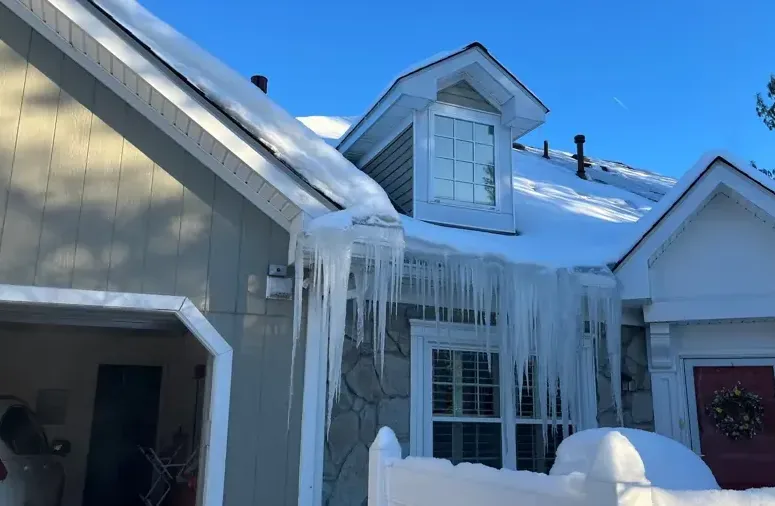
An ice dam forms when heat escaping into the attic melts roof snow that refreezes at the cold eave. The trapped meltwater then has nowhere to go but under the shingles and into the house. Mild afternoons and cold nights over several weeks are what build one.
What to do first for ice dam water damage
- 1
Stay off the roof
Ice and snow make roofs dangerous, so leave dam removal to a roofer.
- 2
Catch the drip
Place buckets and move belongings away from the wet ceiling and wall.
- 3
Photograph the stains
Capture the ceiling, the exterior wall and the roof edge, with dates, before any cleanup.
- 4
Call for drying
Wet insulation keeps soaking in, so request a moisture check even after the drip stops.
What does ice dam water damage cost in Orono, MN?
Ice dam interior damage usually costs $1,200 to $9,000. A single wall or window head sits near the bottom, while several rooms with wet attic insulation reach the top.
One wall section
$1,200 to $3,000- Moisture mapped
- Wall dried in place
- Checked each day
Ceiling plus exterior wall
$3,000 to $6,000- Insulation pulled
- Drywall opened
- Cavity dried
Several rooms affected
$6,000 to $9,000- Attic insulation removed
- Multiple drying zones
- Longer equipment run
These are typical figures, not a quote. Water category, wet square footage, material class and how quickly drying began move the total the most. The water damage cost calculator gives a closer range for your rooms.
How ice dam water damage is done, start to finish
Moisture gets mapped before a single fan is placed, so the plan follows what is actually wet. The drying team leaves the equipment running until meter readings reach the goal, whatever the surface looks like.
- 1
Map the moisture
A moisture meter and thermal camera follow the meltwater down from the roof edge.
- 2
Remove the wet layers
Soaked insulation and drywall come out so trapped water can leave the structure.
- 3
Dry the cavity
Air movers and dehumidifiers pull moisture from the framing.
- 4
Confirm dry
Final readings match unaffected areas before the equipment leaves.
How meltwater gets inside
Water backs up behind the ice ridge, creeps beneath the shingles and drips through the roof deck into insulation, ceilings and the top of the exterior wall. Stains often show far below the actual entry point. Thin or wet attic insulation lets more heat escape, which keeps the cycle going.
- Wet attic insulation that stops insulating
- Drywall that stains, bubbles or sags at the ceiling edge
- Water running down inside the exterior wall to window heads
What drying involves
The crew removes soaked insulation, opens drywall where readings show water and starts structural drying with air movers and dehumidifiers in the cavity. Equipment is placed to dry the living space below, because the attic stays cold.
- Moisture mapping across the ceiling and wall
- Wet insulation bagged and removed
- Daily readings until framing is dry
Roof work is a separate trade
A roofer removes ice, snow and the cause of the dam, while the restoration team handles the interior, as it would for any ceiling leak. Photographs of the roof edge and the ceiling stains help the adjuster tie the damage to the weather. Gutters, soffits and vents also matter, but those are repairs for the roofer rather than the drying crew.
The goal is dry framing before the next thaw. Once readings are done, the drywall and insulation can be rebuilt. Records kept during the visit show the adjuster what was wet and when it dried.
Ice dam water damage around Orono and nearby towns
Ice dam calls cover ZIP code 55356 and the shoreline neighborhoods of Crystal Bay, Stubbs Bay and Brackett's Point, plus homes along Old Crystal Bay Road North.
The same service nearby: ice dam water damage in Hopkins, Shorewood, Minnetonka.
Related water damage services in Orono
Ice Dam Water Damage questions in Orono, MN
Does insurance cover ice dam damage?
Many policies cover interior damage from ice dam seepage but not always the roof itself, and terms vary. Read the policy and ask the carrier before repairs begin.
Why is the stain far from the roof edge?
Water travels along rafters and insulation before it soaks through the ceiling, so a stain can appear a long way from where it entered.
Should I chip the ice off myself?
A roofer should handle it, since hacking at ice damages shingles and ladders on ice are dangerous. The restoration team deals only with water inside.
How long does ceiling drying take?
Ceiling and wall cavities usually need several days of drying, though insulation can add time. Daily readings decide when equipment is removed.
Will the insulation need replacing?
Wet insulation loses its value and holds water against the framing, so soaked sections are removed. Dry batts may stay if readings are normal.
Can it happen again?
Yes, if heat keeps leaking into the attic or the roof edge ices up. Ask the roofer about insulation, air sealing and ventilation to prevent a repeat.
Dry the ceiling before the next thaw
The drying team maps the wet ceiling and wall, removes soaked insulation and runs equipment until the framing reaches its dry goal.
(888) 432-4933Book a ceiling dry-out- Active water treated as urgent, 24/7
- Drying goal set by IICRC S500
- Moisture logs kept for the adjuster
- Find us on Google