Water Extraction Orono, MN
Standing water does more harm the longer it sits. The extraction crew in Orono pulls it from carpet, floors and low spots, then maps what is still wet.
(888) 432-4933Call for water removal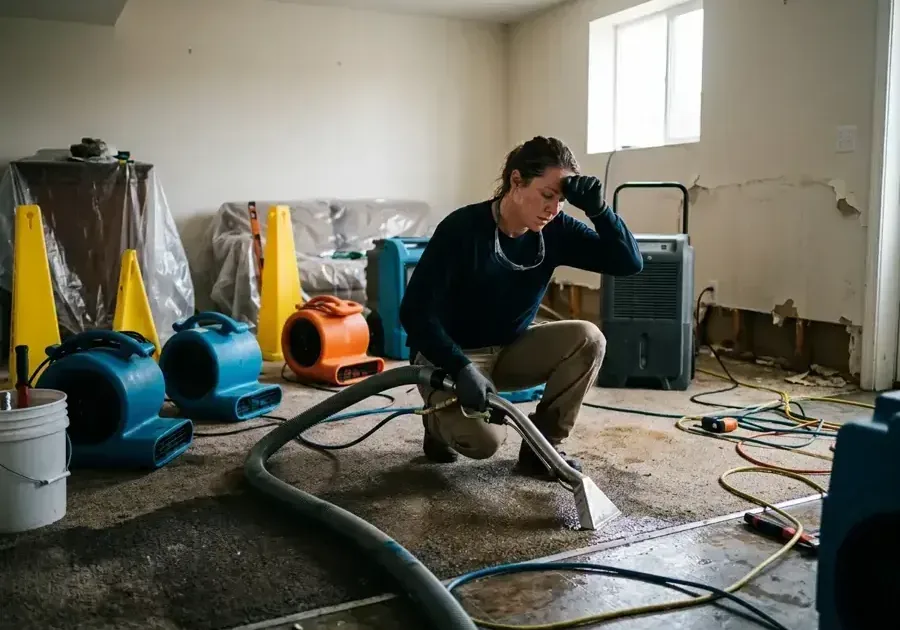
Extraction comes before drying, because every gallon pulled out is a gallon the dehumidifiers never have to handle. Lake Minnetonka reached a record high in June 2014, and standing water after storms or high groundwater needs prompt removal. Fast removal also limits how far the water wicks into drywall and framing.
What to do first for water extraction and removal
- 1
Avoid deep water
It can conceal electrical hazards, so stay out while the power is on.
- 2
Stop the source
Close the supply valve if a pipe or appliance is leaking.
- 3
Lift small items
Raise belongings out of the water if it is safe.
- 4
Call for extraction
Report the depth and water type so the right pumps go along.
What does water extraction and removal cost in Orono, MN?
Water extraction usually costs $500 to $4,500. One room with a thin layer of water sits near the bottom, while a whole level or Category 3 water brings the top of the range.
A single room
$500 to $1,200- Wand extraction
- Quick moisture check
- Air movers set
Several rooms or basement
$1,200 to $2,800- Truck-mounted unit
- Carpet extraction
- Dehumidifiers set
Whole level or Category 3
$2,800 to $4,500- Submersible pumps
- Protective gear
- Pad removal
These are typical figures, not a quote. Water category, wet square footage, material class and how quickly drying began move the total the most. The water damage cost calculator gives a closer range for your rooms.
How water extraction and removal is done, start to finish
Moisture gets mapped before a single fan is placed, so the plan follows what is actually wet. The drying team leaves the equipment running until meter readings reach the goal, whatever the surface looks like.
- 1
Identify the water
The crew checks the source, depth and water type before choosing equipment.
- 2
Pull the water
Pumps and extractors remove standing water, working from the deepest area outward.
- 3
Check what remains
Meters and cameras show the moisture left in carpet, drywall and floors.
- 4
Hand off to drying
Air movers and dehumidifiers continue the work with daily readings.
Which equipment is used
Truck-mounted extractors cover large areas with long hoses, portable units fit stairs and tight rooms, and submersible pumps lower deep water. Weighted tools press and pull moisture from carpet and pad. The crew picks the unit by water depth, stairs and hose reach.
- Wands for hard floors and thin films
- Submersible pumps for several inches of water
- Weighted extractors for carpet and pad
What extraction cannot do
Pumps cannot reach moisture inside drywall, framing or subfloor, so extraction is followed by moisture mapping and a structural drying plan. A floor that looks dry can still hold water underneath.
- Moisture meter checks under flooring
- Thermal camera scans of walls
- A drying plan matched to the readings
Water types change the method
Clean water can often be extracted and the materials saved, while gray water and sewage call for protective gear and removal of porous items. The crew confirms the type before choosing the method. Photos of the water before removal show the adjuster how deep and how far it spread.
Once extraction is finished, air movers and dehumidifiers take over and readings continue each visit. The volume removed is noted for the claim file.
Water extraction and removal around Orono and nearby towns
Extraction calls cover ZIP code 55356, including Navarre, Crystal Bay and Bederwood, and homes along Brown Road, North Shore Drive and the Highway 12 corridor.
The same service nearby: water extraction and removal in Hopkins, Shorewood, Minnetonka.
Related water damage services in Orono
Water Extraction and Removal questions in Orono, MN
Can I rent a wet vacuum instead?
For a thin film of clean water, yes. A house vacuum cannot handle inches of water, gray water or carpet pad, and it leaves moisture in the structure.
How much water can be removed?
Trucks and pumps handle anything from a thin film to several feet, and the crew works from the deepest area outward. What remains in materials is dried afterward.
Is the carpet always thrown out?
Not always. Clean water caught fast may allow carpet to be extracted and dried in place, while the pad is often replaced. Contaminated water means removal.
Does extraction include drying?
Extraction removes liquid water. Drying then handles moisture in materials, and the two are usually planned together so the structure does not stay damp.
What if the water came from a storm?
Storm and flood water is treated as contaminated, so protective gear and removal of porous materials come with the extraction. The storm flood page covers that process.
Will extraction stop the damage to walls?
It reduces it, but water already inside drywall and framing needs drying. Meters show how far the moisture went.
Pull the water out before it spreads
The extraction crew removes the water, checks what is still wet and hands the job to the drying team with readings in hand.
(888) 432-4933Request water removal- Active water treated as urgent, 24/7
- Drying goal set by IICRC S500
- Moisture logs kept for the adjuster
- Find us on Google