Appliance Leak Water Damage Plymouth, MN
A washer hose, dishwasher seal or refrigerator supply tube can leak quietly under cabinets and flooring. The drying team finds how far the water spread, lifts what is wet and dries the cabinet bases, subfloor and any room below.
(888) 432-4933Plymouth appliance leak help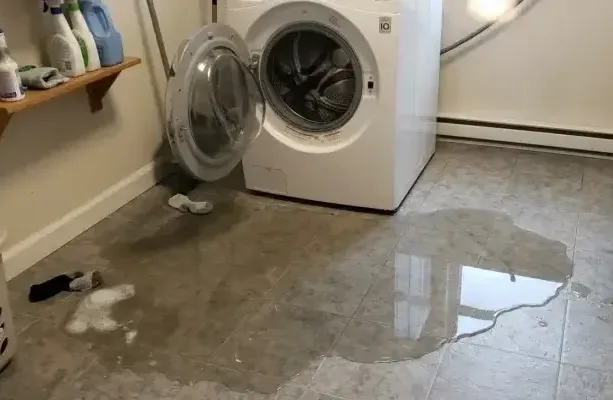
Appliance leaks can happen in any of the 22,298 owner-occupied or 9,506 renter-occupied homes here. Most start with a worn hose, a failed seal or a clogged drain, and the water often spreads before anyone sees it.
What to do first for appliance leak water damage
- 1
Unplug the appliance
Unplug the unit if the cord and outlet are dry, or switch off the breaker.
- 2
Shut the supply
Close the valve behind the appliance to stop the water flow.
- 3
Pull it out carefully
Slide the appliance away only if the floor is safe and dry enough to stand on.
- 4
Photograph the leak
Photograph the appliance, the hose and the wet floor before cleanup begins.
What does appliance leak water damage cost in Plymouth, MN?
Appliance leaks usually cost between $800 and $6,000. A leak found quickly in one room is the least expensive, and water that reaches the room below costs the most.
Found quickly, one room
$800 to $1,800- Extraction
- Toe-kick drying
- Daily readings
Under cabinets and flooring
$1,800 to $3,800- Cabinet base drying
- Flooring lifted
- Antimicrobial
Room below affected
$3,800 to $6,000- Ceiling opened below
- Two drying zones
- Longer equipment run
These are typical figures, not a quote. Water category, wet square footage, material class and how quickly drying began move the total the most. The water damage cost calculator gives a closer range for your rooms.
How appliance leak water damage is done, start to finish
Moisture gets mapped before a single fan is placed, so the plan follows what is actually wet. The drying team leaves the equipment running until meter readings reach the goal, whatever the surface looks like.
- 1
Find the water
Moisture readings show how far the leak spread under cabinets and flooring.
- 2
Extract and lift
Standing water is removed, and wet flooring is lifted where needed.
- 3
Open the hidden spaces
Toe kicks and low panels come off so air can reach cabinet bases.
- 4
Dry and verify
Equipment runs until readings match a dry reference, then comes out.
Slow leaks that hide
A washer hose or dishwasher seal can drip for weeks, soaking the subfloor and the back of cabinet bases while the visible floor stays dry. A musty smell, a soft floor or a warped toe kick is often the first sign.
- Cabinet bases wick water from a wet floor
- Laminate and vinyl trap water underneath
- Water can travel along joists to a room below
Cabinets, flooring and the room below
The crew extracts the water, removes toe kicks to reach the cabinet base and lifts flooring that is holding moisture. Vent openings and air movers dry the hidden spaces, and a ceiling below is checked when the kitchen or laundry sits above another room.
- Toe kicks come off so cabinet bases can dry
- Flooring is lifted only where readings require it
- A ceiling below is checked and opened if wet
Which category is it
Washer and dishwasher discharge is often gray water because it carries soap and food residue, while a refrigerator supply leak is usually clean. The category sets how much carpet, pad and drywall must be removed, as shown in water extraction. Nearby cities are listed on the service area page.
Appliance leak water damage around Plymouth and nearby towns
Appliance leak calls reach ZIP codes 55441, 55442, 55446 and 55447, including kitchens and laundry rooms in Hollydale, around Parkers Lake and near Medicine Lake.
The same service nearby: appliance leak water damage in Hopkins, Minnetonka, Orono.
Related water damage services in Plymouth
Appliance Leak Water Damage questions in Plymouth, MN
Which appliances leak most often?
Washers, dishwashers and refrigerators with ice makers lead the list, mostly because of worn hoses, failed seals and clogged drains.
Is appliance leak water clean or dirty?
A refrigerator supply leak is usually clean, while washer and dishwasher discharge is often gray. The category changes how much material comes out.
Does the flooring need to be torn up?
Not always. Readings decide, and flooring is lifted only where it is holding moisture.
How long can a slow leak go unnoticed?
Weeks or longer, because the water stays under the appliance and cabinets. A soft floor or a musty smell is a typical clue.
Who repairs the appliance?
An appliance technician or plumber repairs the hose, seal or drain, while the drying team handles the water damage.
Is an appliance leak covered by insurance?
Sudden leaks are often covered, but slow seepage may not be. Ask your own insurer, and keep photos and readings.
A leaking appliance can soak the floor below
Describe the appliance, how long it leaked and the rooms nearby, and the drying team will plan the extraction and drying.
(888) 432-4933Start the leak cleanup- Active water treated as urgent, 24/7
- Drying goal set by IICRC S500
- Moisture logs kept for the adjuster
- Find us on Google