Water Extraction Plymouth, MN
Standing water in a home soaks into carpet, pad and baseboards fast. The extraction crew brings truck-mounted and portable pumps to pull it out, then checks what the water reached.
(888) 432-4933Plymouth standing water help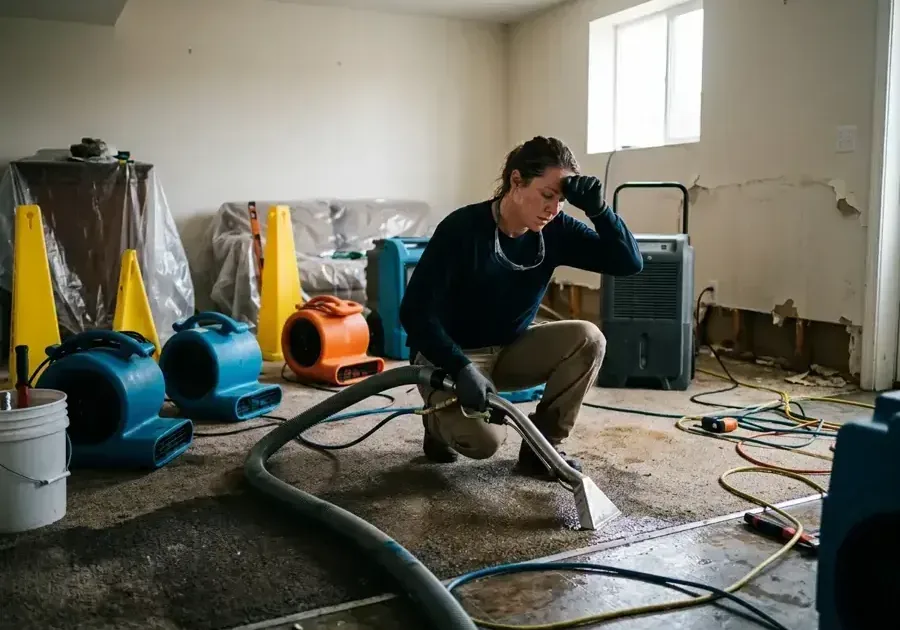
Extraction comes before drying because every gallon left on the floor has to be evaporated later. Pulling the water out mechanically is faster, cheaper and kinder to the structure than letting dehumidifiers do the same work. It is also the stage where the crew learns the water's source and category.
What to do first for water extraction and removal
- 1
Stop the water
Close the shutoff valve or the main if something is still running.
- 2
Cut wet power
Switch off breakers to wet areas and skip household vacuums.
- 3
Lift what you can
Raise furniture onto blocks and move rugs and boxes off the floor.
- 4
Photograph first
Photograph the water and the damage before anything is pumped out.
What does water extraction and removal cost in Plymouth, MN?
Water extraction usually costs between $500 and $4,500, and the number follows the volume of water, the area covered and whether it is clean water or sewage. One room costs the least and a whole level costs the most.
Single room
$500 to $1,200- Wand extraction
- Moisture check
- Air movers set
Several rooms or a basement
$1,200 to $2,800- Truck-mounted extraction
- Weighted carpet pass
- Dehumidifiers set
Whole level or Category 3
$2,800 to $4,500- Submersible pumps
- Protective protocols
- Pad removal
These are typical figures, not a quote. Water category, wet square footage, material class and how quickly drying began move the total the most. The water damage cost calculator gives a closer range for your rooms.
How water extraction and removal is done, start to finish
Moisture gets mapped before a single fan is placed, so the plan follows what is actually wet. The drying team leaves the equipment running until meter readings reach the goal, whatever the surface looks like.
- 1
Assess the water
The crew checks depth, source and category, and isolates hazards first.
- 2
Pump the bulk
Submersible pumps and truck-mounted units remove most of the water.
- 3
Extract the carpet
Weighted tools press moisture out of carpet and pad, and wands reach corners.
- 4
Check and hand off
Moisture readings show what remains, and drying equipment is set where needed.
How fast water can arrive after a storm
Runoff here drains toward Plymouth Creek, Parkers Lake and Medicine Lake, and the June 2003 storm, with more than six inches of rain in under 12 hours, showed how quickly water can reach basements. In a flood like that, quick pump-out matters most.
- Submersible pumps handle deep water in basements
- Truck-mounted units pull water from large carpeted areas
- Wands and weighted tools reach water held in pad
What extraction does not finish
Extraction removes liquid water, but moisture stays in the slab, subfloor, baseboards and wall cavities. A moisture meter and thermal camera show what is left, and dehumidifiers and air movers take over from there. Skipping that step is how a floor that looks dry ends up wet underneath.
- Slab and subfloor still hold moisture after pumping
- Baseboards and wall bottoms wick water upward
- The air stays humid until dehumidifiers are running
Category 3 water changes the plan
Sewage and floodwater are contaminated, so protective gear and disposal of wet pad come first. Sewer backup cleanup and storm flood cleanup cover those cases in detail.
Water extraction and removal around Plymouth and nearby towns
Extraction calls reach ZIP codes 55441, 55442, 55446 and 55447, covering Hollydale, the Parkers Lake neighborhood and homes beside Medicine Lake, Bass Lake and the Plymouth Creek area.
The same service nearby: water extraction and removal in Hopkins, Minnetonka, Orono.
Related water damage services in Plymouth
Water Extraction and Removal questions in Plymouth, MN
What is the difference between extraction and drying?
Extraction removes liquid water with pumps and wands. Drying removes the moisture left in materials and air using dehumidifiers and air movers, and it takes longer.
Can wet carpet be extracted and saved?
Often yes, when the water is clean and the pad is lifted or replaced promptly. Gray or black water means carpet and pad are removed instead.
Is a shop vacuum enough for a flooded floor?
A shop vacuum handles a small spill, but it leaves most of the water in pad and subfloor. Truck-mounted units and weighted tools move far more.
How deep can the water get before pumps are needed?
Once the water is deeper than a wand can handle, submersible pumps drop the level first.
Should extraction wait for the insurance adjuster?
No. Photos and readings come first, then extraction starts so the damage does not grow while waiting.
Does extraction cost more for sewage?
Yes. Category 3 water needs protective protocols, disposal of porous materials and disinfecting, so those jobs sit at the top of the range.
Pull the water out before it soaks in
Tell the dispatcher how much water there is and what it touched, and the extraction crew will bring the right pumps and tools.
(888) 432-4933Ask about pump-out- Active water treated as urgent, 24/7
- Drying goal set by IICRC S500
- Moisture logs kept for the adjuster
- Find us on Google