Appliance Leak Water Damage in Minnetonka, MN
Appliance leaks are quiet. A washer hose, a dishwasher seal or a fridge supply tube can seep behind a cabinet for weeks. The drying team finds the wet path, dries the floor and cabinet bases and documents the cause.
(888) 432-4933Ask about an appliance leak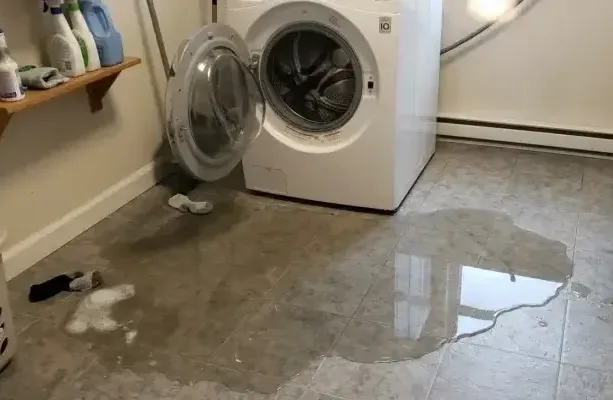
Minnetonka has 16,834 owner households and 6,681 renter households, and every one of them runs appliances that can leak. A failed hose or seal rarely announces itself until a floor feels soft.
What to do first for appliance leak water damage
- 1
Close the valve
Shut the appliance's supply valve, or the main if it is stuck.
- 2
Unplug it safely
Disconnect the appliance only if the plug is dry and reachable from a dry spot.
- 3
Move the appliance clear
Slide it away from the wall to see the hose and floor.
- 4
Photograph the source
Capture the failed part, the wet floor and any stains on walls or ceilings below.
What does appliance leak water damage cost in Minnetonka, MN?
A leak found quickly in one room commonly runs $800 to $1,800. Water under cabinets and flooring raises it to $1,800 to $3,800, and a leak that reaches the room below can reach $3,800 to $6,000.
Found fast, one room
$800 to $1,800- Water removed
- Toe-kick dried
- Readings daily
Under cabinets and floor
$1,800 to $3,800- Flooring lifted
- Cabinet bases dried
- Antimicrobial
Room below affected
$3,800 to $6,000- Ceiling opened
- Two drying zones
- Longer equipment stay
These are typical figures, not a quote. Water category, wet square footage, material class and how quickly drying began move the total the most. The water damage cost calculator gives a closer range for your rooms.
How appliance leak water damage is done, start to finish
Moisture gets mapped before a single fan is placed, so the plan follows what is actually wet. The drying team leaves the equipment running until meter readings reach the goal, whatever the surface looks like.
- 1
Find the source
The failed hose, seal or tube is identified, and a meter marks the wet edge.
- 2
Remove the water
Standing water is extracted, and wet flooring edges are lifted.
- 3
Dry the base
Air movers push air under cabinet toe-kicks while a dehumidifier lowers humidity.
- 4
Read until dry
Readings continue until subfloor, cabinet base and walls read dry.
The usual suspects
Washer supply hoses, dishwasher door seals and drain connections, refrigerator ice maker tubes and water softener fittings all fail with age. The damage tends to start behind or beneath the appliance, where nobody looks.
- Hoses and fittings behind the machine inspected
- Cabinet toe-kicks and base panels checked for moisture
- Flooring edges and seams read with a meter
What gets wet under the floor
Water from a kitchen or laundry leak seeps under vinyl or laminate, into the subfloor and along the cabinet base. Particleboard cabinet bases swell and do not recover, while solid surfaces often dry. The crew sorts the two by readings.
- Vinyl and laminate lifted at the wet edge
- Cabinet bases dried, or cut away if swollen
- Subfloor read until it matches dry reference
When the leak reaches the room below
In a multi-unit building or a house with a basement, appliance water can drip through the floor. The team checks the ceiling below and sets equipment there as well, with notes the adjuster can follow.
- Ceiling below inspected and read
- Two drying zones when both levels are wet
A leak that has already stained the room below is also handled on the ceiling leak water damage page.
Appliance leak water damage around Minnetonka and nearby towns
Appliance leaks are handled across ZIP codes 55305, 55343, 55345 and 55391, including Glen Lake, Ridgedale and Shady Oak, in owner-occupied homes and rentals alike.
The same service nearby: appliance leak water damage in Hopkins, Edina, Plymouth.
Related water damage services in Minnetonka
Appliance Leak Water Damage questions in Minnetonka, MN
Which appliance leaks cause the most damage?
Washers and dishwashers, because they hold or move a lot of water. Ice maker tubes cause slow, hidden leaks.
Can a leak behind a cabinet be dried without removal?
Sometimes. Vent holes or a removed toe-kick can let air reach the wet area. Swollen particleboard is usually cut away.
Will the floor need replacing after a washer leak?
Tile and sealed hardwood often dry in place. Vinyl, laminate and carpet over a wet subfloor may be lifted. Readings decide what stays.
Does insurance cover an appliance leak?
Sudden leaks are often covered, while slow seepage may not be. Policies differ, so check with your own insurer and keep photos of the failed part.
How long can an appliance leak go unnoticed?
Weeks, if it is behind a cabinet or under a machine. Soft flooring, a musty smell or swollen trim are common signs.
Should the appliance be replaced before drying starts?
Not necessarily. The leak must be stopped, but drying can begin while a repair is arranged.
Small leaks soak big floors
The extraction crew removes the water, dries the floor and cabinet bases and checks the room below before the job closes.
(888) 432-4933Start with a leak check- Active water treated as urgent, 24/7
- Drying goal set by IICRC S500
- Moisture logs kept for the adjuster
- Find us on Google