Commercial Water Damage Plymouth, MN
A wet suite or warehouse stops business fast. The restoration team contains the water, dries in phases and works around tenants so the space can reopen.
(888) 432-4933Call about a business loss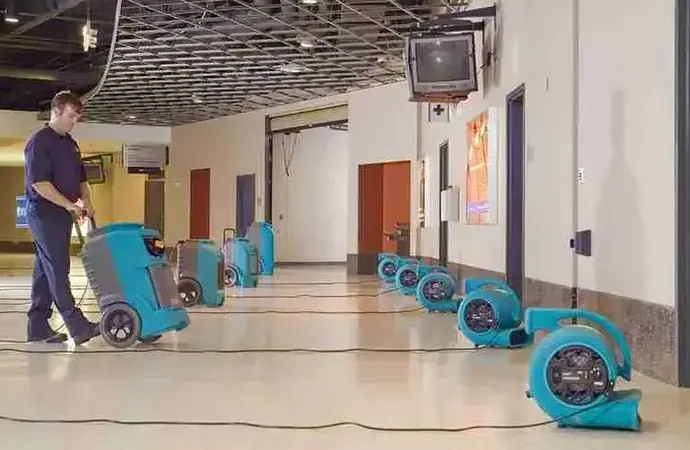
The city counts about 53,202 jobs, and the Parkers Lake watershed includes industrial land, so a leak in one suite can interrupt several tenants at once. Owners and managers need a plan that dries the space and protects the schedule.
What to do first for commercial water damage
- 1
Stop the source
Close the nearest valve or the building main, and call the property manager.
- 2
Cut power to wet areas
Switch off wet circuits and keep staff away from sagging ceilings.
- 3
Protect inventory
Move stock, files and equipment off wet floors and away from drips.
- 4
Photograph and report
Photograph the loss and report it to the manager and the carrier.
What does commercial water damage cost in Plymouth, MN?
Commercial water damage usually costs between $5,000 and $60,000. One suite costs the least, and a whole building or any Category 3 loss needs containment, air scrubbing and shared documentation and costs the most.
One suite or storefront
$5,000 to $15,000- Extraction
- Drying zone
- Daily readings
Several suites or a floor
$15,000 to $35,000- Containment walls
- Phased drying
- After-hours work
Whole building or Category 3
$35,000 to $60,000- HEPA air scrubbing
- Porous removal
- Multi-party documentation
These are typical figures, not a quote. Water category, wet square footage, material class and how quickly drying began move the total the most. The water damage cost calculator gives a closer range for your rooms.
How commercial water damage is done, start to finish
Moisture gets mapped before a single fan is placed, so the plan follows what is actually wet. The drying team leaves the equipment running until meter readings reach the goal, whatever the surface looks like.
- 1
Assess and contain
The team finds the source, maps the wet space and seals it off.
- 2
Extract and open
Water is removed, and wet ceiling tiles, drywall and insulation are opened.
- 3
Dry in phases
Equipment is placed by zone and moved as each area reaches target.
- 4
Report to every party
Readings and photos are packaged for the owner, tenants and carriers.
Keeping a business open
The team isolates the wet area with containment walls, extracts the water and runs equipment in phases so the rest of the building can stay in use. Noisy work and tear-out can be scheduled after hours.
- Containment keeps dust and humidity out of occupied suites
- Phased drying moves equipment as areas reach target
- After-hours work protects customer and tenant time
Paperwork for several parties
Commercial losses often involve an owner, a property manager, tenants and more than one carrier. The restoration team keeps separate photo sets, moisture logs and scope notes for each space so every party sees the same facts.
- Photos and readings are dated by suite
- Scope notes list removed and dried materials
- Equipment logs show what ran and where
Roof, sprinkler and pipe leaks
Roof leaks, sprinkler discharge, burst pipes and failed drains each move water differently through ceilings and wall cavities. The plan starts with finding the source, then drying ceiling grids, insulation, drywall and floors. Pipe leaks are covered in burst pipe water damage, and nearby cities are listed on the service area page.
Commercial water damage around Plymouth and nearby towns
Commercial calls reach ZIP codes 55441, 55442, 55446 and 55447, including the Parkers Lake watershed and routes along Highway 55, I-494 and US 169.
The same service nearby: commercial water damage in Hopkins, Minnetonka, Orono.
Related water damage services in Plymouth
Commercial Water Damage questions in Plymouth, MN
Can a business stay open during drying?
Often yes. Containment and phased work keep the dry areas in use while the wet area is isolated.
Is after-hours work available?
Yes. Tear-out and noisy equipment placement can be scheduled outside business hours.
Who is billed for a commercial loss?
That depends on the lease and the policies involved. The restoration team documents the work so the owner, tenant and carriers see the same records.
What if the water came from a sprinkler or roof?
The source changes the plan, but the steps are the same: stop the water, extract, dry ceilings and walls and log readings.
How are separate suites documented?
Each suite gets its own photos, readings and scope notes so tenants and the owner can file separately.
Does Category 3 water close a building?
It can close the affected area until the contaminated material is removed and the space is cleaned and cleared.
A wet suite needs a plan that keeps tenants working
Tell the dispatcher the type of space, what leaked and which suites are affected, and the restoration team will plan the dry-out around the building.
(888) 432-4933Start the business plan- Active water treated as urgent, 24/7
- Drying goal set by IICRC S500
- Moisture logs kept for the adjuster
- Find us on Google