Structural Drying Plymouth, MN
Water that has soaked framing, subfloors and drywall needs measured drying, not just fans. The drying team sets dehumidifiers and air movers by room volume and logs readings until each material reaches its target.
(888) 432-4933Plymouth drying equipment help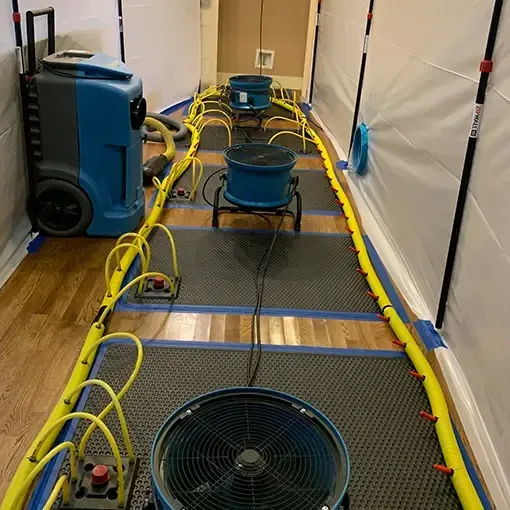
The median home here was built in 1989, and about 7,360 homes date from the 1980s and 7,382 from the 1990s. Drying work often involves framing, subfloors and drywall from those decades, which is why the plan starts with readings.
What to do first for structural drying and dehumidification
- 1
Keep equipment running
Leave the dehumidifiers and air movers on, since stopping early lets materials rewet.
- 2
Close doors and windows
Keep affected rooms closed so the dehumidifiers pull moisture from the right air.
- 3
Move belongings out
Take wet clothing, books and papers out of drying rooms before humidity climbs.
- 4
Keep the log visible
Leave the reading sheets and equipment tags where the team can reach them.
What does structural drying and dehumidification cost in Plymouth, MN?
Structural drying usually costs between $1,200 and $8,000. A single area of low-porosity materials stays near the low end, and hardwood, plaster or several rooms with wet ceilings push toward the top.
Class 1 or 2, one area
$1,200 to $3,000- Air movers
- LGR dehumidifier
- Daily readings
Class 3, several rooms
$3,000 to $5,500- Multiple dehumidifiers
- Cavity drying
- Psychrometric logs
Class 4, hardwood or plaster
$5,500 to $8,000- Desiccant dehumidifier
- Drying mats
- Extended monitoring
These are typical figures, not a quote. Water category, wet square footage, material class and how quickly drying began move the total the most. The water damage cost calculator gives a closer range for your rooms.
How structural drying and dehumidification is done, start to finish
Moisture gets mapped before a single fan is placed, so the plan follows what is actually wet. The drying team leaves the equipment running until meter readings reach the goal, whatever the surface looks like.
- 1
Classify the loss
Readings set the category and drying class before equipment is chosen.
- 2
Place the equipment
Dehumidifiers and air movers are sized to the rooms and aimed at wet surfaces.
- 3
Monitor each day
Temperature, humidity and moisture are recorded and equipment adjusted.
- 4
Release the room
Materials reach target and equipment leaves with the logs.
Classes of water damage
The S500 standard sorts losses into classes by how much moisture the materials hold. Class 1 and 2 jobs dry quickly with air movers and a dehumidifier, while Class 3 and 4 jobs involve wet ceilings, hardwood or plaster and need more equipment and longer monitoring.
- Class 1 and 2 jobs involve one area and low-porosity materials
- Class 3 jobs involve several rooms and wet ceilings
- Class 4 jobs involve hardwood, plaster or concrete
How the equipment is placed
Dehumidifiers are matched to room volume, and air movers are aimed along walls and under cabinets to push dry air across wet surfaces. Drying mats pull moisture out of hardwood, and vent holes let humidity escape from closed cavities. Containment sheeting keeps the drying zone sealed so the dehumidifiers work on the wet air only.
- Low-grain dehumidifiers handle most residential rooms
- Desiccant units handle cold or very wet spaces
- Air movers are repositioned as the readings change
Readings decide the finish
Temperature, humidity and moisture content are logged each day, and equipment moves or leaves as materials reach target. The logs are what an adjuster reads, and they follow water extraction in the usual job order. Nearby cities are listed on the service area page.
Structural drying and dehumidification around Plymouth and nearby towns
Structural drying work reaches ZIP codes 55441, 55442, 55446 and 55447, covering homes from Hollydale and Parkers Lake to the Medicine Lake area and the Highway 55 corridor.
The same service nearby: structural drying and dehumidification in Hopkins, Minnetonka, Orono.
Related water damage services in Plymouth
Structural Drying and Dehumidification questions in Plymouth, MN
How long does structural drying take?
Many jobs need several days of equipment time, but readings decide, not the calendar. Hardwood and plaster take longer.
Why not just use fans?
Fans move air but do not remove moisture from it. Dehumidifiers pull the water out so the humidity does not rise or rewet the room.
Why do dehumidifiers run so long?
Wet framing and subfloors release moisture slowly, so the equipment stays until each material reaches its dry reference.
Can hardwood floors be saved?
Often, when drying mats and dehumidifiers start early. Readings and the amount of cupping decide whether boards are kept.
Is the noise and heat normal?
Yes. Dehumidifiers add heat and air movers add sound, and both are part of controlled drying.
What is in the drying log?
Daily temperature, humidity and moisture readings, plus equipment counts and notes, which an adjuster can read.
Drying that stops early leaves the structure wet inside
Tell the dispatcher what flooded, which rooms are wet and what materials are underfoot, and the drying team will size the equipment.
(888) 432-4933Start the drying plan in Plymouth- Active water treated as urgent, 24/7
- Drying goal set by IICRC S500
- Moisture logs kept for the adjuster
- Find us on Google