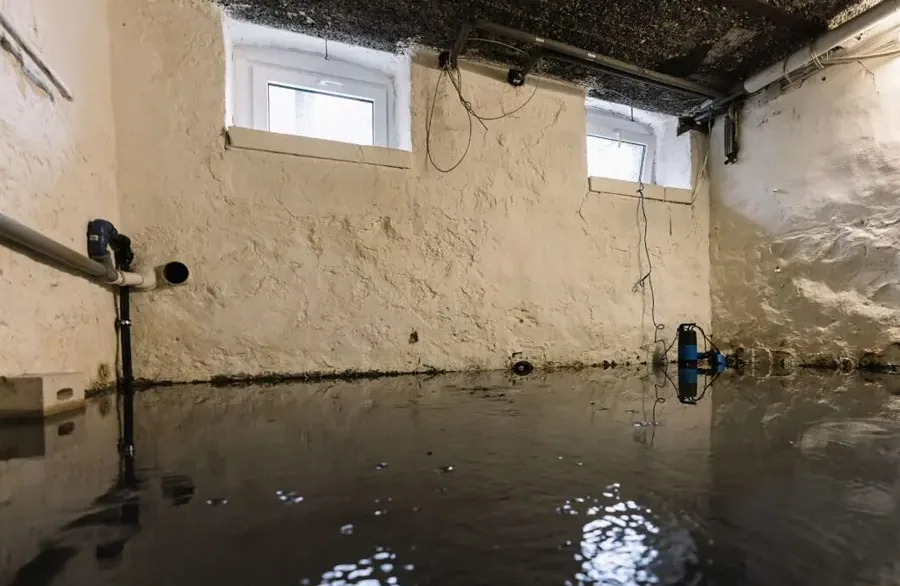
On June 24 and 25, 2003, more than six inches of rain fell in the Plymouth area in under 12 hours. A storm sewer manhole cover near homes along Vicksburg Lane blew off, water gushed out and basements flooded.
Key takeaways
- More than six inches of rain fell in under 12 hours on June 24 and 25, 2003, above the 100-year design standard.
- A storm sewer manhole cover near homes along Vicksburg Lane blew off, and basements flooded.
- The city later raised the manhole and built a permanent pumping station beside the affected homes.
- The land south of those homes was a low natural wetland until 1987, when Vicksburg Lane was widened.
- Storm water in a basement is Category 3, so the response removes soaked materials and dries the structure.
What happened in June 2003
The event is worth knowing because it shows how a storm sewer, not a creek or a lake, can put water in a basement.
A storm above the design standard
Storm sewers are built to a design standard, and the 100-year standard describes a rare, heavy rain. The June 2003 storm went past it, with more than six inches falling in under 12 hours.
A design standard is a planning number, not a promise that every storm will stay under it. A 100-year storm is a rare event with about a one percent chance of happening in any year, and a storm can still exceed it.
The manhole cover
Near homes along Vicksburg Lane, a storm sewer manhole cover blew off. Water gushed out of the opening, and basements flooded.
The city's response
Afterward the city raised the manhole and built a permanent pumping station beside the affected homes. That is the kind of fix that follows a failure of the system, not a failure of one house.
What the event teaches
A storm sewer can fail locally even when most of a city drains well. A home close to one weak point can flood while homes a few blocks away stay dry.
Why a storm sewer can flood a basement
A storm sewer is a closed pipe that carries rain from streets and yards. When rain arrives faster than the pipe can move it, pressure builds and water looks for the nearest way out.
That way out can be a manhole, a low yard, a window well or a floor drain.
In a heavy storm the storm sewer is shared by many homes and streets, so its level depends on far more than one lot. A basement near a weak point is where the overload shows up first.
- Window wells that fill and spill over the sill.
- Doors at ground level, including walkout doors.
- Cracks where the foundation wall meets the floor.
- Floor drains that connect to a system already full of water.
Low ground with a history
The land south of those homes was a low natural wetland until 1987, when the city widened Vicksburg Lane. Water still follows low ground, even after the ground has been built over.
A lot near a former wetland, a pond or a creek can collect water in a heavy storm. That is true for a single yard and for a whole block.
Water has always found the low spots in this part of Minnesota. In the spring of 1857, Parkers Lake flooded, and a gristmill on its northwest shore was taken down and moved to Wayzata.
The first hour after a basement floods
Storm water in a basement is a safety problem before it is a cleanup problem.
Even shallow water can hide an electrical hazard. A basement with only an inch of water still has outlets, wiring and appliances at floor height.
- Stay on the stairs rather than wading in, because the water may be touching outlets or the furnace.
- Switch off basement power at a dry panel, or have the electric utility shut it off.
- Photograph the water level and the damage before moving things.
- Lift boxes, rugs and electronics to dry ground.
- Call for pumps early; the sooner the water is out, the less of the structure it reaches.
- Write down when the water was first noticed and when it stopped rising.
How the cleanup handles storm water
Extraction and removal
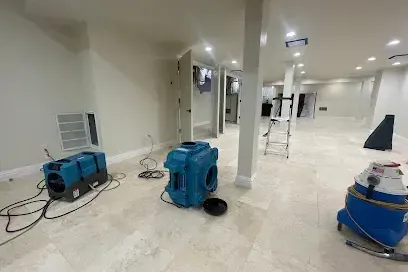
The crew starts with water extraction. Storm water is Category 3, so carpet, pad and wet drywall are removed, while concrete and other hard surfaces are cleaned and disinfected.
Submersible pumps handle deep water, and wand-style extractors lift what is left from the floor surface. The crew works from the lowest point outward so water does not drain back.
Drying and checks
The slab and framing are dried and then tested with a moisture meter until they stop showing water. A large event is handled as storm and creek flood cleanup, and a single flooded level as basement flooding cleanup.
A flood this sudden can leave water inside walls that nobody can see. Readings taken at several heights tell the crew how far up the water traveled.
Preparing for the next heavy rain
City guidance says a Plymouth sump pump must connect to a rigid pipe that routes water outdoors, discharging to the lawn or the storm sewer. A pump with a loose or blocked discharge pipe cannot do its job, which is covered in sump pump failure cleanup.
None of this promises a dry basement in an extreme storm. It does reduce the number of small failures that turn a wet night into a flooded one.
Gutters that dump roof water at the foundation add to the load during a cloudburst, so downspouts deserve a look too.
- Test the sump pump and check that the discharge pipe is rigid and clear.
- Learn which low spots on the lot collect water.
- Keep valuables and important papers off the basement floor.
- Keep downspouts and window wells clear before a forecast storm.
Questions
What was the June 2003 storm in Plymouth?
On June 24 and 25, 2003, more than six inches of rain fell in under 12 hours, above the 100-year design standard. A storm sewer manhole cover near homes along Vicksburg Lane blew off and basements flooded.
What did the city do afterward?
The city raised the manhole and built a permanent pumping station beside the affected homes.
Is storm water in a basement Category 3?
Yes. Storm water carries soil and bacteria, so porous materials that soaked it up are removed and hard surfaces are cleaned and disinfected.
What does the city say about sump pump discharge?
A Plymouth sump pump must connect to a rigid pipe that routes water outdoors, discharging to the lawn or the storm sewer.
How is a flooded basement dried?
After the water is pumped out and soaked materials are removed, fans and dehumidifiers dry the slab and framing, and readings show when the work is done.
Does a flooded basement near a storm sewer mean the sump pump failed?
Not necessarily. A sump pump handles groundwater around the foundation. Water that comes up from a storm sewer or pours through a window well can overwhelm even a working pump.